NDC Sets Up Reconciliation Committee to Unite Party Ahead of 2027
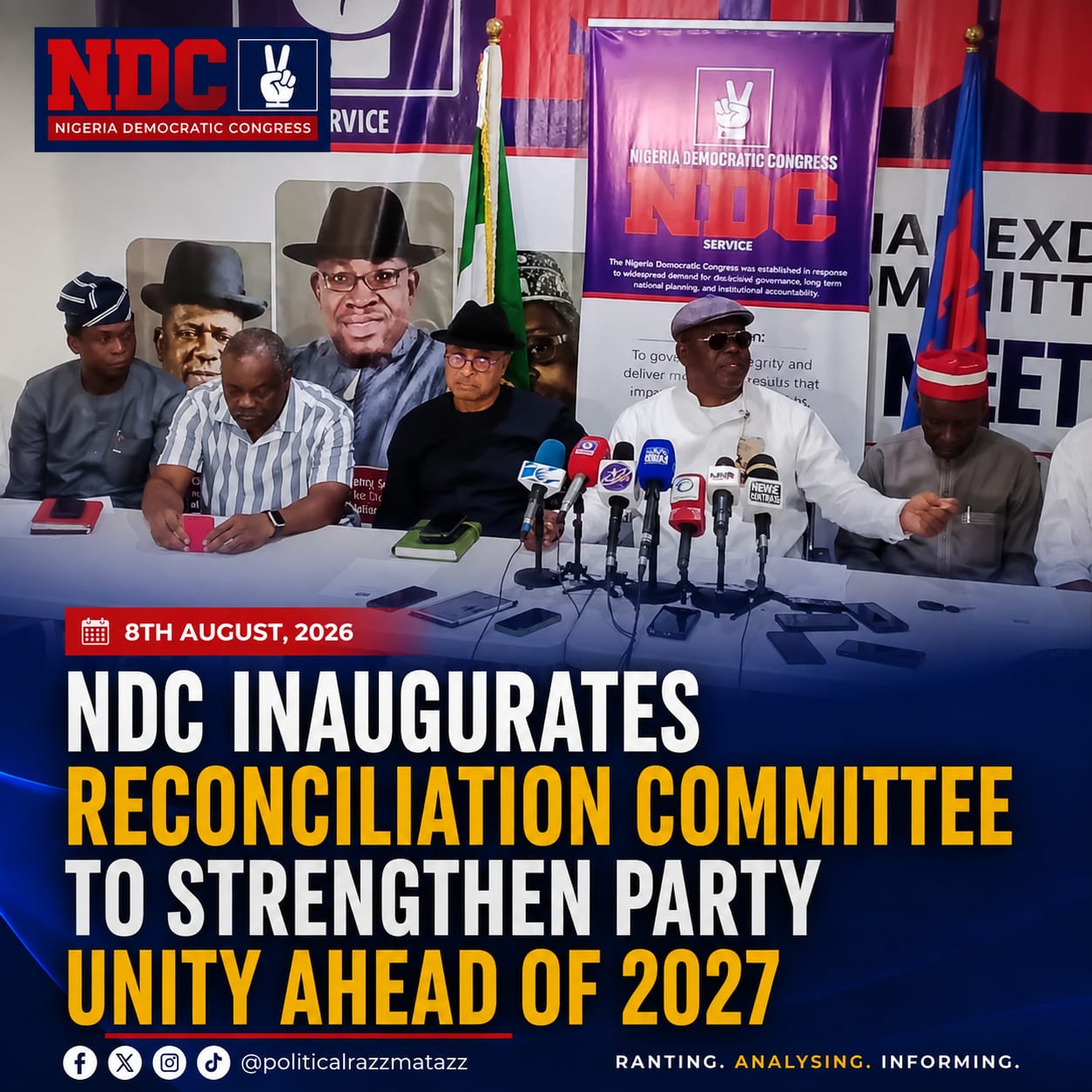
The Nigeria Democratic Congress (NDC) has taken a major step to solve its internal problems. The party recently set up a seven-member National Reconciliation Committee. The main goal of this group is to bring aggrieved members together and fix disagreements that happened during the party’s recent primary elections.
This move is part of the party’s plan to build a stronger and more united structure before the 2027 general elections.
Why the Committee Was Formed
After the NDC finished its nationwide congresses and primary elections, many members were unhappy with the results. Some party members even went to court to challenge the outcomes. These court cases made people worry about how ready the party is for the big elections in 2027.
To stop these problems from growing, the party quickly announced this new committee. The leaders want to listen to the angry members across the country and settle all differences.
Who is Leading the Team?
The party chose very experienced leaders for this job:
- Prof. Pat Utomi: A well-known political expert, he is the Chairman of the committee.
- Engr. Buba Galadima: A veteran politician, he serves as the Co-Chairman.
During the launch in Abuja, Prof. Utomi shared that he and Galadima have known each other for 50 years. He believes that because they have stayed friends for so long, they can help other party members unite. The National Chairman of the party, Senator Moses Cleopas, urged all members to cooperate with this committee.
A Focus on the Future
Prof. Utomi stated that the committee’s job is not just about fixing current fights. It is also about the future of Nigeria. He pointed out that the NDC is a party focused on young people, noting that the average age in the country is 19.5 years. The leaders believe that a united party will serve the youth better.
Regional Teams to Help
To make sure everyone is heard, the committee will not just work from the capital. The party also created sub-committees for different regions, including the North, South-East, and South-South zones. This way, leaders can easily meet with aggrieved members in their local areas.
The committee is expected to finish its work and submit a full report by the end of August, just in time for the official campaign season.