




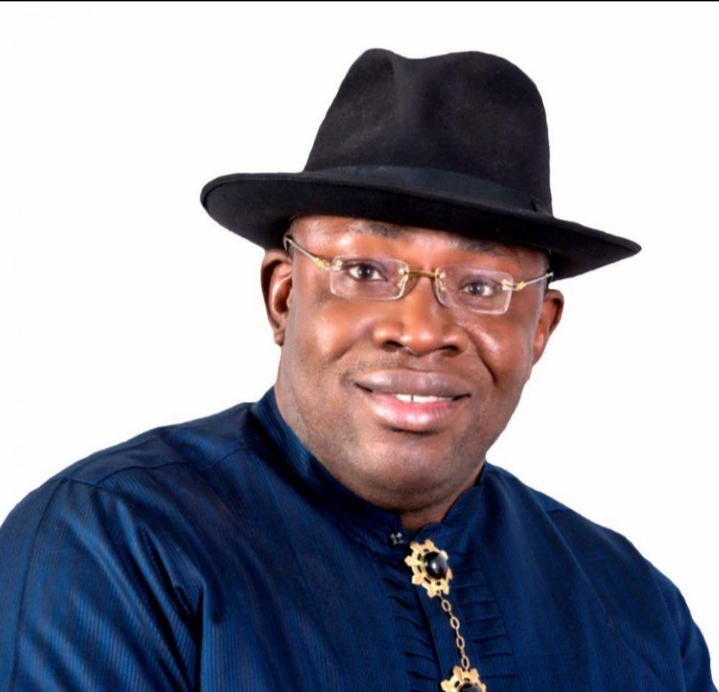
Justice Peter Lifu: A Menace to Nigerian Democracy?
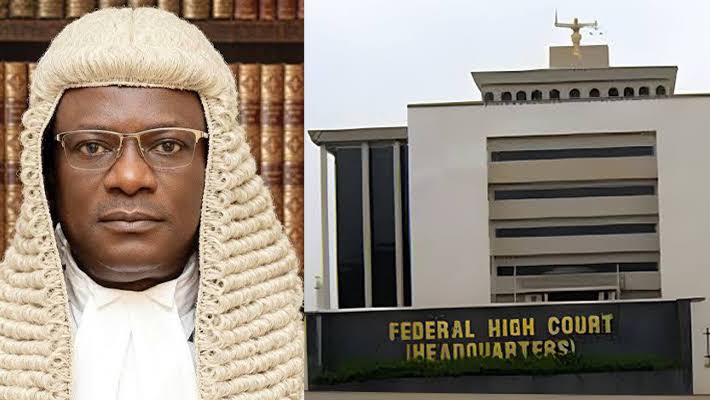
The role of the judiciary in a constitutional democracy is to serve as an impartial arbiter, a stabilizing force, and the ultimate custodian of the rule of law. However, when a judge weaponizes judicial discretion to create political outcomes while actively defying superior courts, they cease to function as a minister in the temple of justice. Instead, they transform into a severe institutional risk.
The actions of Justice Peter Lifu of the Federal High Court in Abuja represent a dangerous trend of “judicial rascality.” His recent conduct threatens to destabilize Nigeria’s democratic fabric and erode public trust in the legal system.
1. Subverting Democracy Through “Judicial Deregistration”
A thriving democracy relies on political pluralism the freedom of citizens to organize, choose, and vote for diverse political platforms. By ordering the Independent National Electoral Commission (INEC) to deregister five active political parties (including the ADC, Accord, AA, APP, and ZLP), Justice Lifu essentially attempted to reshape the political landscape by judicial fiat.
What makes this a distinct threat to democracy is twofold:
- The Disregard for Democratic Thresholds: Legal analysts and observers pointed out that some of the targeted parties had already met constitutional requirements (such as the ADC winning legislative seats in the 2023 elections). By ignoring these realities, the judgment appeared less like an objective enforcement of the law and more like a targeted political clearing exercise designed to narrow opposition choices.
- The Timing of the Onslaught: Issuing a sweeping existential order right after these political parties concluded their primaries creates immense administrative and electoral chaos. It effectively disenfranchises thousands of candidates and voters, throwing upcoming elections into entirely preventable turmoil.
2. Striking at the Root of the Judiciary: “Judicial Impertinence”
The administration of justice cannot survive without structure, hierarchy, and discipline. The 1999 Constitution explicitly binds lower courts to comply with the directives and decisions of superior courts. Justice Lifu’s decision to deliver his deregistration judgment, despite a explicit, subsisting stay of proceedings issued by the Court of Appeal on May 22, 2026, is a direct assault on this hierarchy.
When the Court of Appeal reviewed his actions, they did not mince words, labeling his conduct as “judicial rascality” and “the highest form of judicial impertinence.”
“The Supreme Court had previously held that a judge who acted in such a manner is unfit for the bench as it amounts to judicial rascality.”
— Justice Abbah Mohammed, Court of Appeal Lead RulingBy telling lawyers he would “take care of” the superior court’s stay order in his final judgment rather than halting his proceedings, Justice Lifu dared the appellate system. If high court judges can choose which superior orders to obey and which to disregard, the rule of law collapses into a state of institutional anarchy.
3. Punishing Dissent and the Failure of Recusal
A cornerstone of judicial integrity is the principle that justice must not only be done but must be seen to be done. When a litigant expresses a documented, reasonable apprehension of bias, a judge with honor typically steps down to preserve the sanctity of the court.
Justice Lifu did the exact opposite. When the ADC and its National Secretary, Rauf Aregbesola, moved for him to recuse himself due to manifest bias, he dismissed their applications as “blackmail” and slapped them with a ₦500,000 fine each for an “abuse of court process.”
This punitive approach creates a chilling effect on democratic actors seeking equity. Furthermore, as legal scholars have pointed out, sitting to hear an internal leadership dispute involving a political party that he himself had just ordered out of existence creates a bizarre, contradictory legal paradox that strips the court of all credibility.
The Verdict: A Menace to the Republic
When a judge behaves as though they are above the very laws they swore to protect, they undermine the entire democratic experiment. By ignoring superior courts, stifling political pluralism, and penalizing parties who question his neutrality, Justice Lifu has crossed the line from legal error into institutional defiance.
For Nigerian democracy to survive, the National Judicial Council (NJC) must treat this not merely as a case of an overturned judgment, but as a critical behavioral crisis that requires decisive disciplinary action to protect the bench from further ridicule.
The Court of Appeal’s suspension of the ADC deregistration judgment underscores how the higher court intervened to address what it labeled as judicial impertinence and protect the integrity of the judicial hierarchy.