

The Twisted Tale of Gratitude (Part 2): Exposing the Illusion of Mentorship in Niger Delta Politics
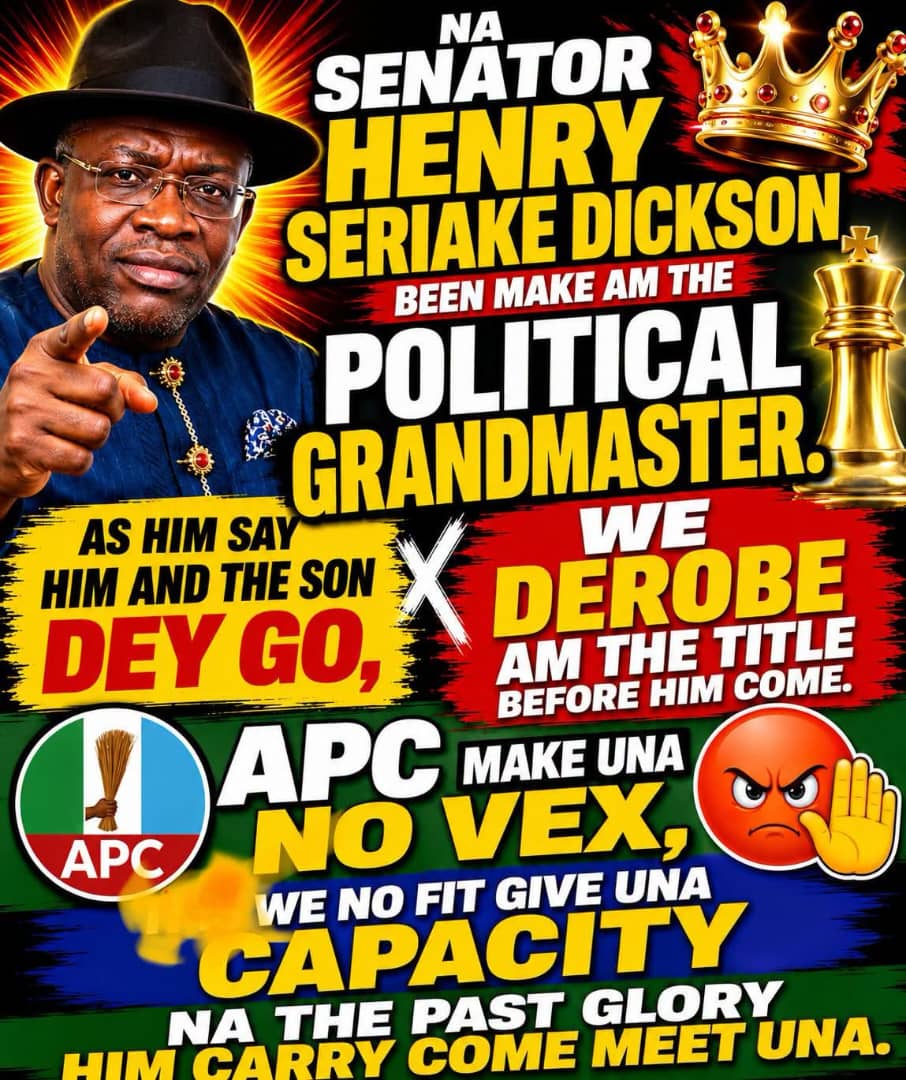
(By The Political Razzmatazz Editorial Team | Investigative Opinion)
In Part One of this series, we uncovered a startling reality: the elder statesman currently parading himself as the benefactor of Senator Henry Seriake Dickson was, in fact, a squatter living under the roof of Dickson’s uncle. Far from providing accommodation or support, the elder was a beneficiary of a family’s grace, while a young, struggling Dickson washed his car just to show appreciation for the household.
But the story does not end there.
As the years rolled on and the political landscape of the Niger Delta shifted, the young boy the elder once ignored transformed into a political titan. Having risen through sheer determination, rigorous legal practice, and unmatched political grit, Seriake Dickson evolved into a two-term Governor, a serving Senator, and the National Leader of the Nigeria Democratic Congress (NDC).
And this is precisely where the elder’s memory miraculously reinvented itself.
The Revisionist Historian
Today, this elder crafts a completely different tale. Whenever the microphones are on, he speaks as though he was the gracious host who housed a young Dickson. He heavily implies that he made substantial financial and political contributions to Dickson’s growth and success.
This public storytelling portrays the elder as the grand architect of Senator Dickson’s progress. It is a convenient narrative that completely omits his earlier indifference and actively erases the fact that he was the one seeking shelter under the exact same roof.
Let’s be clear: the relationship was never one of mentor and protégé in any material sense.
The Danger of Selective Amnesia
This blatant historical revisionism raises incredibly uncomfortable questions about integrity and memory in public life.
Nigerian politics often rewards selective amnesia, but when elders actively rewrite their personal history to claim unearned credit, it is incredibly damaging. It diminishes the real, raw struggles of those who rose entirely through their own grit and the genuine support of their real families—like the uncle who provided the actual roof over their heads.
“In a society where young people are constantly lectured about respect for elders, stories like this test the absolute foundations of that cultural expectation. Respect must be reciprocal.”
When an elder who failed to lift a finger at a critical moment later steps forward to claim undue credit, it breeds deep cynicism. It sends a toxic message to the next generation of Nigerian youth: that success doesn’t need to be earned; it can just be retrofitted into convenient stories by those looking for political relevance.
Proximity is Not Mentorship
The old saying “no one knows tomorrow” rings particularly true in this saga.
Senator Dickson’s political journey, his undeniable governance record in Bayelsa, and his continued national relevance have, in many ways, elevated the profiles of those associated with him. Ironically, this includes the very elder who contributed absolutely nothing to his success. The elder benefited from his proximity to Dickson’s power, not the other way around.
Yet, instead of displaying gratitude or acknowledging the true dynamics of their shared past, the elder continues to project a fictional narrative of one-sided benevolence.
Over to You
True statesmanship demands absolute honesty about the past. The creeks of the Niger Delta have seen many tales of political betrayal, but fabricating a mentorship that never existed is a new low. Acknowledging that Senator Dickson made his own way would be far more honorable than trying to rewrite history.
Why do you think older politicians often try to claim the success of younger leaders they never actually helped? Does this kind of political entitlement destroy the concept of true mentorship in Nigeria? Have your say in the comments below!