



What the NDC’s Electoral Act Ruling Actually Means
(By The Political Razzmatazz Editorial Team | Legal & Governance)
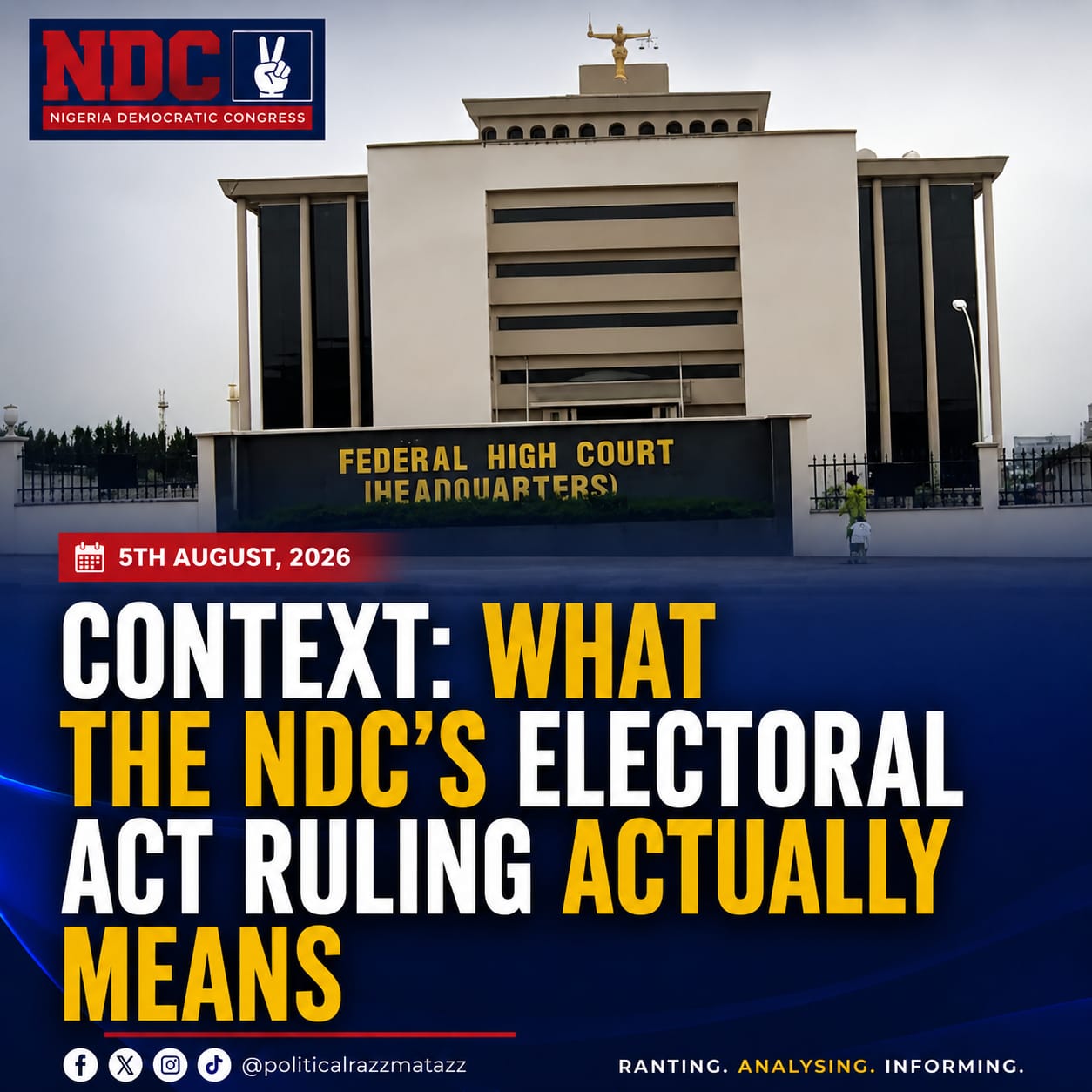
On Tuesday, the Federal High Court in Abuja, presided over by Justice Mohammed Umar, dismissed a lawsuit filed by the Nigeria Democratic Congress (NDC). The party had sought a court order to strike down Sections 138 and 77(5) of the Electoral Act 2026.
While headlines quickly announced that the party’s case was dismissed for lacking merit, the real story requires a closer look at the legal context of the ruling.
A Procedural Dismissal, Not a Defeat
Here is the context worth knowing: the dismissal was largely procedural. The court upheld the objections challenging how the suit was originally framed.
Justice Umar ruled that the NDC was essentially asking the court to interpret existing provisions of the law, rather than presenting a fresh, solid constitutional challenge.
- Section 138: The court found that Section 138 actually “complements” rather than conflicts with the Nigerian Constitution.
- Section 77(5): Interestingly, the court did not even issue a fresh ruling on this section. Instead, Justice Umar simply followed an earlier Court of Appeal decision that had already settled the matter legally.
Zero Effect on the NDC’s 2027 Plans
The most crucial takeaway from this ruling is what it does not do.
This court decision has absolutely zero effect on the NDC’s official registration, its status on the ballot, or the eligibility of its candidates for the 2027 general elections. The party’s legal standing remains entirely untouched by this case.
What the NDC was seeking with this lawsuit was a legal change to when qualification disputes can be legally raised during the electoral process. They were not challenging their own standing or legitimacy as a political party.
The NDC remains fully on track for 2027, with this ruling acting simply as a procedural clarification rather than a political setback.