


EFCC Freezes Osun State Account: Can They Do It Without a Court Order?
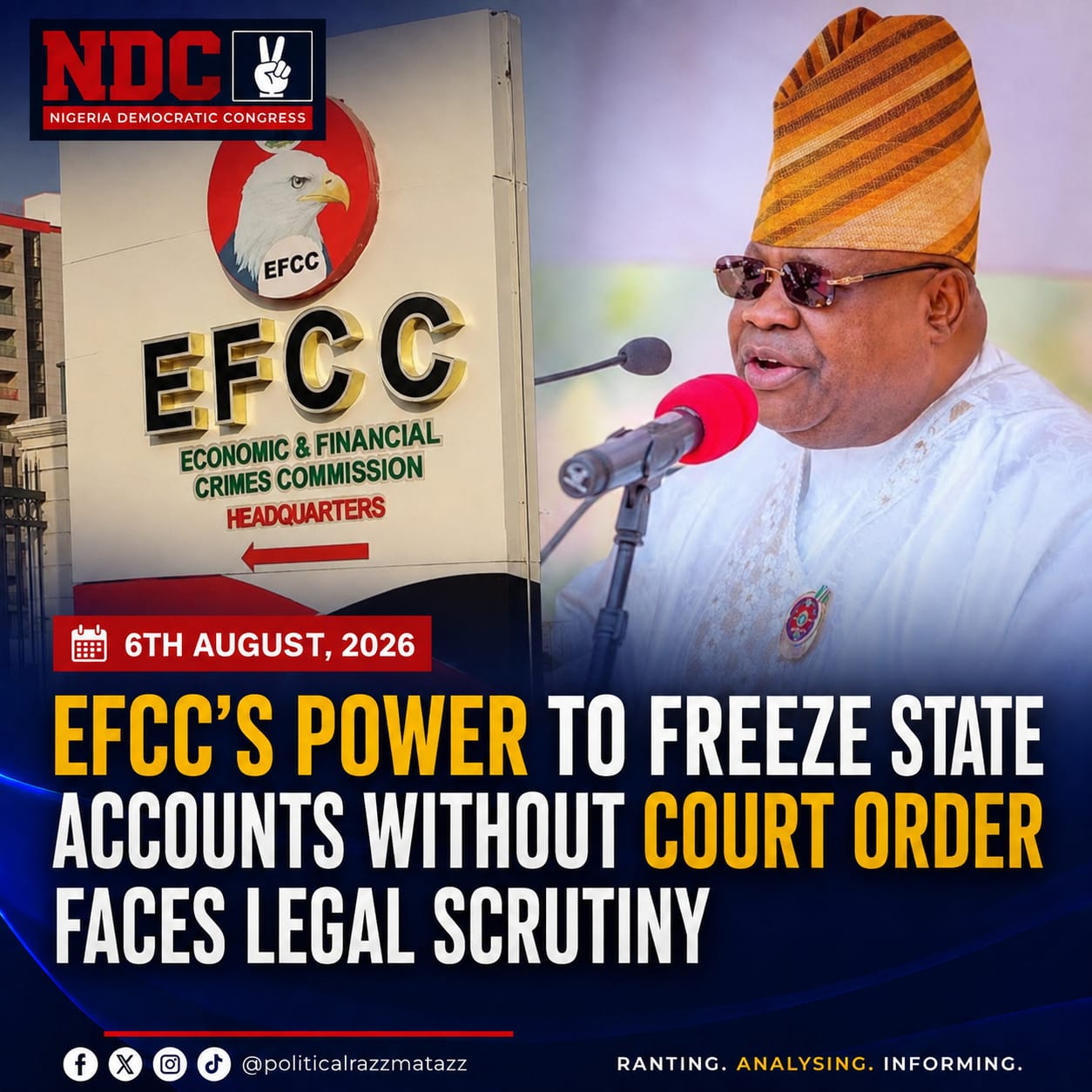
The Economic and Financial Crimes Commission (EFCC) recently made a bold move by placing a “Post-No-Debit” order on a bank account belonging to the Osun State Government. This restriction stops any money from leaving the account.
However, this action has sparked a major legal debate: Can a federal anti-graft agency freeze a state’s statutory funds purely on its own authority, or does it need a judge’s approval first?
Why Did the EFCC Freeze the Account?
The EFCC stated that it has been investigating the Osun State Government since March 2026. The investigation focuses on the alleged mismanagement of roughly N11 billion. These funds include:
- Ecology Funds
- Intervention Funds
- Federal Account Allocation Committee (FAAC) allocations
During this ongoing probe, several state officials, including the Accountant General, have already been questioned by investigators. The EFCC claims it was forced to swiftly freeze the account because it detected suspicious movements of huge funds into different corporate entities.
The Legal Argument
The core of the dispute is whether the EFCC followed due process.
The EFCC’s Stance
The commission defends its actions by pointing to Section 34 of the EFCC Act and Section 7(6) of the Money Laundering Act. The agency argues that these laws give it the power to place a temporary restriction on an account for up to 72 hours before needing to seek an official court order.
The State’s Defense
Osun State has completely rejected the fraud claims, calling the account restriction unlawful and politically motivated. Legal experts and the Nigerian Bar Association are also questioning the move. They argue that freezing a state’s account should require a judge’s permission beforehand to ensure due process.
A Look at Past Court Decisions
This situation is complicated by a prior Court of Appeal ruling involving Benue State. In that earlier case, the court rejected the argument that state government accounts are totally immune from EFCC restrictions. This past ruling makes the current legal battle much harder to predict.
What Happens Next?
Osun State is not backing down. The state government has already taken the matter to the Federal High Court in Osogbo to seek a legal resolution.
This case is now a genuine test of the EFCC’s investigative boundaries. The final court ruling will likely clarify exactly how far the EFCC’s powers extend over state government finances across the whole country.