Atiku’s Voluntary NYSC Proposal Sparks Debate
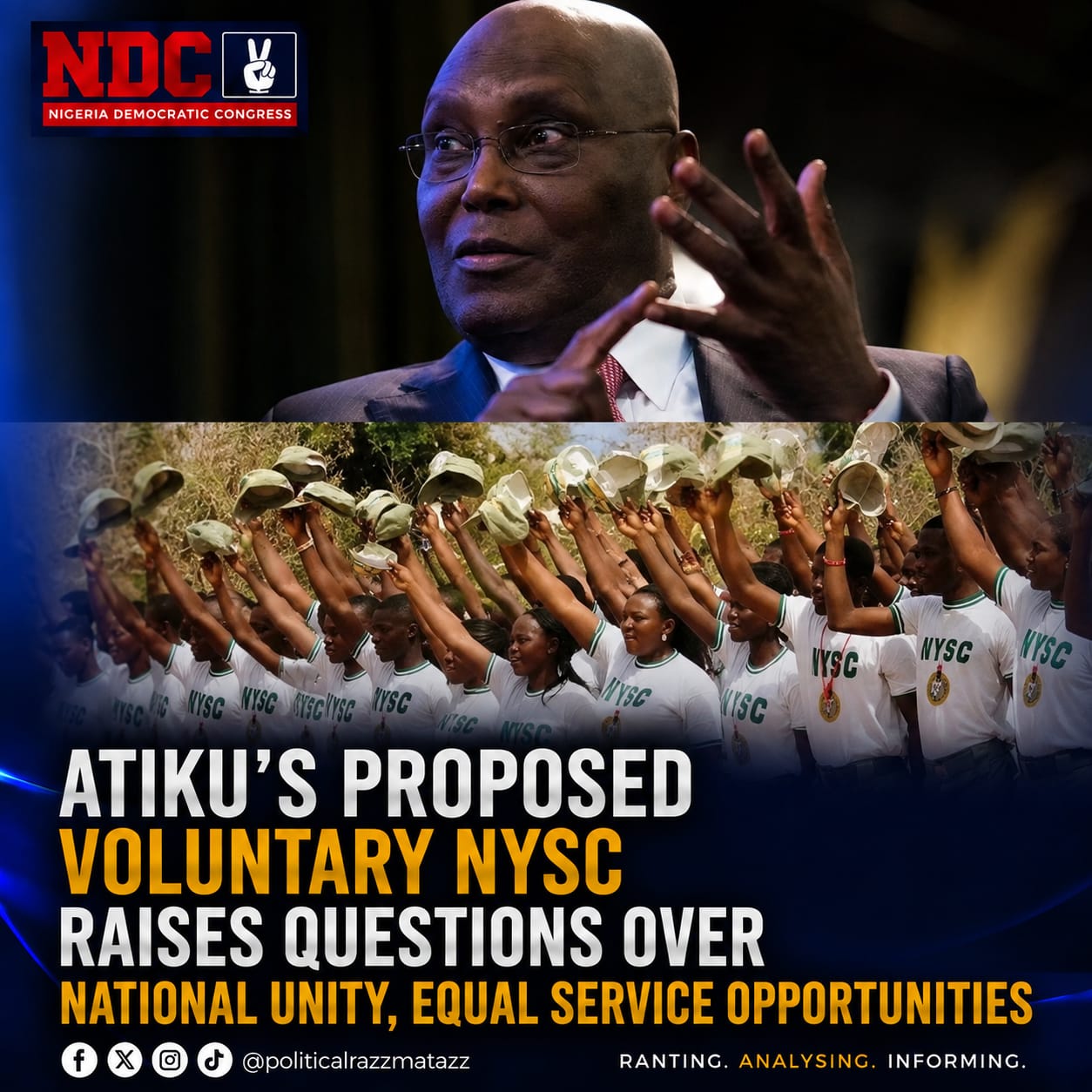
The proposal by African Democratic Congress (ADC) presidential candidate Atiku Abubakar to make the National Youth Service Corps (NYSC) voluntary has ignited a fiery debate across the country. As political parties roll out their policy visions ahead of the 2027 general elections, Atiku’s stance on the decades-old mandatory scheme is raising major questions about youth empowerment versus national integration.
Freedom of Choice vs. National Integration
The ADC presents the voluntary NYSC plan as a modern reform designed to give fresh graduates greater freedom over their career paths. Under this vision, young Nigerians would no longer be legally obligated to dedicate a year to mandatory national service, allowing those with immediate job offers or entrepreneurial plans to enter the workforce without delay.
However, critics warn that making the scheme voluntary could dismantle one of Nigeria’s primary platforms for cross-cultural unity. Established in 1973 after the Nigerian Civil War, the NYSC was built specifically to foster interaction among young people from diverse ethnic, religious, and regional backgrounds. Making participation optional could drastically reduce these interactions, potentially weakening the national unity objective that remains core to the scheme.
Critical Staffing Concerns in Public Sectors
Beyond national unity, policy experts are questioning the practical fallout for essential public services. For decades, thousands of public schools, rural healthcare facilities, and local government offices across Nigeria have relied heavily on corps members to fill vital staffing gaps.
If participation becomes voluntary and enrollment drops, key public sectors—especially in rural and underserved communities—could face severe manpower shortages that local and state governments may struggle to address.
Questions Over Equal Opportunities
The proposal also sparks concern over fairness and equal access to opportunities. Currently, an NYSC discharge or exemption certificate is a legal requirement for formal employment and public office in Nigeria.
A shift to a voluntary model raises several operational questions:
- Career Equity: Will non-participating graduates face hidden disadvantages during public or private sector recruitment?
- Resource Access: How will the government manage benefits, grants, or post-service opportunities associated with national service?
- Socio-Economic Divide: Could voluntary service inadvertently create a divide between those who can afford to take a gap year for service and those who cannot?
As political parties unveil their 2027 agendas, Nigerians will be watching closely to see whether proposed reforms can strike the right balance between personal freedom, youth development, and the broader national interest.