





Why Seriake Dickson Turned His Back on the APC Juggernaut
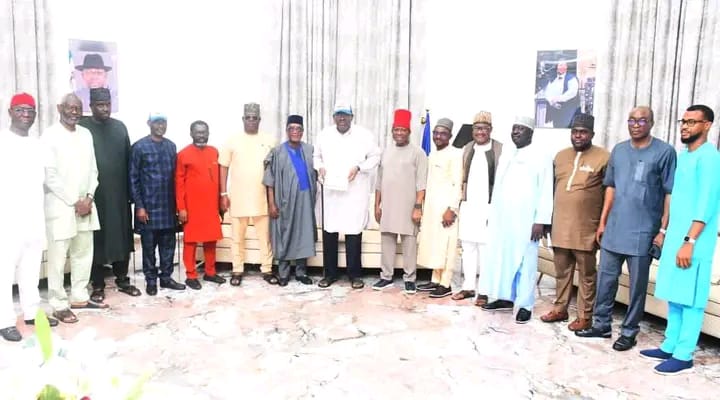
In Nigerian politics, jumping ship to the ruling party has practically become a national sport. Whenever an opposition party hits turbulence, politicians pack their bags and head straight for the ruling platform faster than you can say “cross-carpeting”. It is the easiest path to secure political relevance, enjoy state patronage, and escape administrative heat.
Yet, former Bayelsa State Governor and Senator representing Bayelsa West, Henry Seriake Dickson, chose a radically different lane.
Speaking in Abuja while receiving the formal notification of his selection as LEADERSHIP Newspaper’s Politician of the Year 2026, Dickson laid bare the reason he turned down overtures to join the All Progressives Congress (APC). According to Dickson, as reported by Daily Post in their coverage of Dickson’s statement and Vanguard’s report on his democratic commitment, his decision was anchored on one non-negotiable principle: refusing to allow Nigeria to drift into an unchecked, monolithic one-party system.
For our political terrain, na very strange sight to see big masquerade say “no” to ruling party banquet. But as Dickson made clear, personal political convenience must never swallow the survival of multiparty democracy in Nigeria.
The Temptation of the Easy Way Out
When the Peoples Democratic Party (PDP) entered its downward spiral of factional crises and internal fatigue, the conventional playbook for an influential senator was straightforward: pick up an APC membership card and blend into the establishment.
Dickson admitted that following the decline of the PDP, the path of least resistance would have been to defect to the ruling party. But taking that shortcut would have meant abandoning the core duty of the political elite: maintaining competitive checks and balances.
If everybody pack enter the same room, who go open window make fresh air enter?
When ruling parties face zero opposition, governance quickly deteriorates into complacency. A healthy democratic republic relies on vibrant institutional competition. Without robust multiparty democracy, citizens lose the power to demand accountability, policies are enforced without debate, and the ballot box is reduced to a meaningless ritual. Choosing to resist the ruling party bandwagon was a conscious stand to preserve democratic choice for ordinary Nigerians.
Building From the Ground Up: The Rise of the NDC
Rather than defecting to the APC or staying in an ineffective opposition structure, Dickson and his political associates took the significantly harder road: founding and building the Nigeria Democratic Congress (NDC).
Starting a political party from scratch in Nigeria is an uphill task that many seasoned veterans avoid. It requires massive grassroots mobilization, logistical grit, and immense financial sacrifice. Yet, within months, the NDC evolved into a major opposition platform commanding national attention.
During the presentation, Dickson acknowledged the pivotal roles played by key leaders in driving this vision, particularly highlighting the partnership of the NDC’s presidential candidate, Peter Obi, and vice-presidential candidate, Senator Rabiu Musa Kwankwaso. By pulling together broad-based coalitions across diverse geopolitical belts, the platform proved that building an alternative rooted in multiparty democracy was not only possible, but desperately needed by a public hungry for credible leadership.
Dickson also advised party members to move past nomination grievances and unite behind the party’s roster ahead of the 2027 elections. In politics, internal friction is natural, but when the larger objective is national rescue, personal egos must yield to collective discipline.
A Call for a Peaceful Playing Ground Ahead of 2027
A true test of political maturity is knowing that political competition is not warfare. As the race toward the 2027 general elections begins to heat up, Dickson directed an appeal to President Bola Ahmed Tinubu and the nation’s security agencies to guarantee an atmosphere where all candidates can campaign freely without fear, violence, or intimidation.
“We are not enemies. We are fellow Nigerians who disagree,” Dickson reminded political actors, stressing that disagreements must be argued through legal channels, public debate, and citizen ballots—not through rented thugs, street violence, or partisan intimidation.
If Nigeria is to weather its compounding economic headwinds and social fractures, the political space must remain wide open. Protecting multiparty democracy ensures that the country belongs to all its citizens, not just the occupants of power at any given moment.
Putting Character Above Convenience
Senator Seriake Henry Dickson’s refusal to surrender to the ruling party juggernaut is a rare reminder of what ideological steadfastness looks like in Nigerian public life. While many politicians swap logos at the slightest breeze of self-interest, standing firm to build a credible alternative defends the fundamental soul of the republic.
The road to 2027 will test every political stakeholder. But if history teaches anything, it is that nations are sustained by leaders who place democratic principles above personal comfort. Sustaining multiparty democracy is not just good politics; it is the only shield protecting everyday citizens from executive tyranny.
What Do You Think?
Did Senator Seriake Dickson make the right call by rejecting the APC to build the NDC from scratch, or should opposition leaders unite under fewer existing umbrellas? How crucial is preserving multiparty democracy to tackling Nigeria’s current economic and governance challenges?
Drop your candid thoughts, reactions, and analysis in the comments below!