Inside Utomi’s High-Stakes Push for a 2027 Consensus Candidate
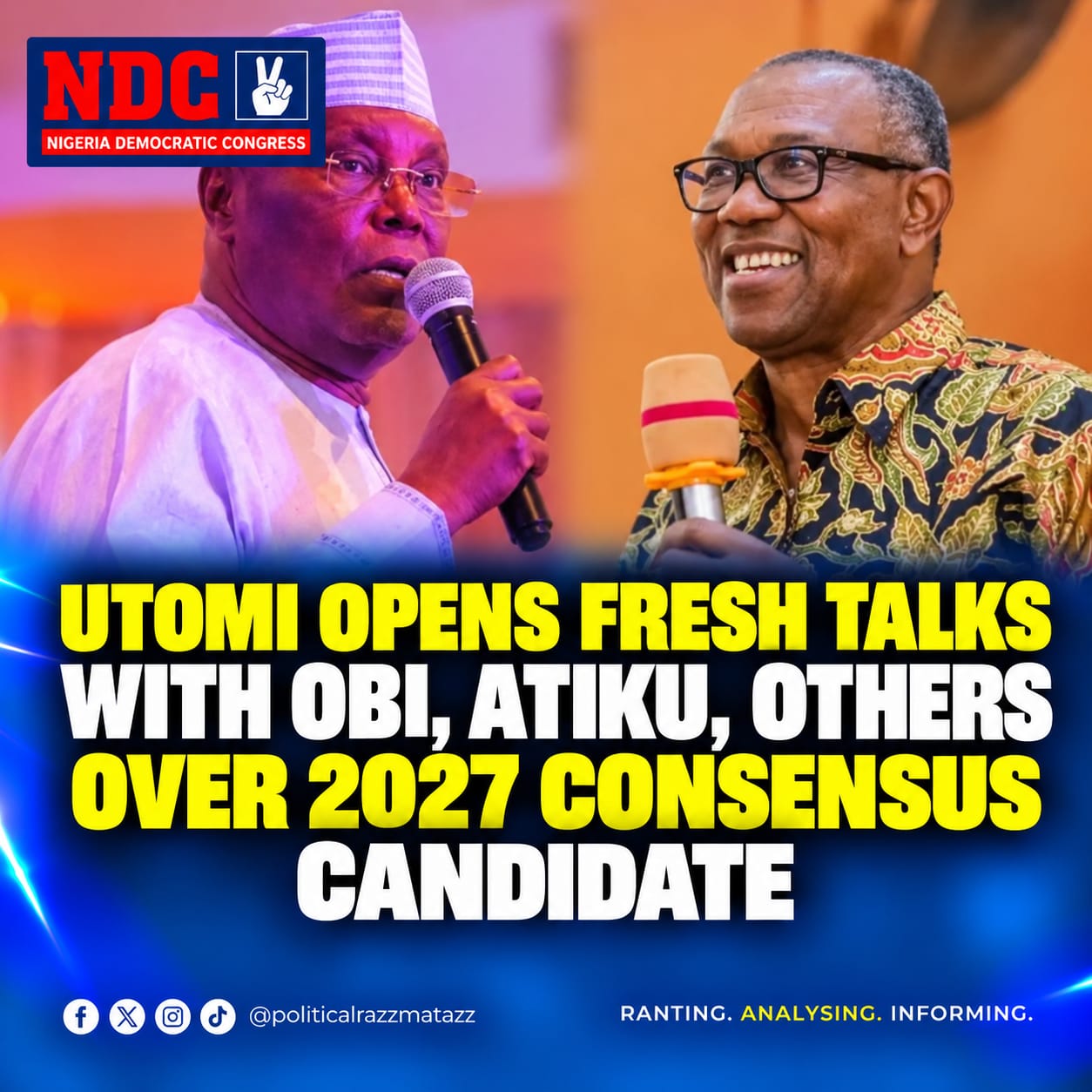
As preparations for the 2027 general elections gather momentum, Professor of Political Economy Pat Utomi has stepped onto the pitch to broker what may be the most delicate political negotiation in Nigeria’s fourth republic.
Through the Political Commission of the Movement for Credible Elections (MCE), Utomi has initiated a round of closed-door consultations with major opposition figures and party chieftains. The objective is direct: facilitate negotiations that could lead to the emergence of a single consensus candidate to challenge the ruling All Progressives Congress (APC).
As detailed in The Punch’s coverage of Utomi’s consultation rounds and corroborated by Legit.ng’s breakdown of the shortlisted contenders, the shortlist of engaged candidates features prominent political actors. These include former Anambra State Governor Peter Obi of the Nigeria Democratic Congress (NDC), former Vice President Atiku Abubakar of the African Democratic Congress (ADC), Oyo State Governor Seyi Makinde (APM), Donald Duke (PRP), and Adewole Adebayo (SDP).
Because as every street-smart Nigerian knows, when four drivers dey fight for one steering wheel, na inside gutter the motor dey land. If the opposition wants to stand a real chance in 2027, unity cannot just be a press release buzzword.
Why the Meetings Are Behind Closed Doors
According to MCE Media Coordinator James Ezema, holding these strategic meetings in secret is a deliberate tactic to shield the negotiation table from saboteurs and political mercenaries seeking to wreck negotiations before they mature.
The timetable is tight: these private rounds are set to conclude ahead of an intensive tactical session scheduled to hold in Ibadan in a fortnight.
Historically, Nigerian opposition coalitions crumble at the exact same hurdle: everyone agrees that a united front is necessary, but the room catches fire the moment they have to decide who steps down for whom. To prevent another round of heartbreak, the Utomi-led commission—which includes respected figures like Mike Igini, Sam Amadi, Solomon Dalung, and Maryam Ciroma—is setting strict evaluation metrics.
Under the proposed framework, adopting a consensus candidate will not be about backroom godfather endorsements. Instead, candidates will be evaluated on national acceptability, institutional commitment, integrity, leadership temperament, and the ability to bridge Nigeria’s deep regional fault lines. Participating parties must also commit in writing to support whoever emerges.
A Coalition of Ideas, Not Just Big Names
The current effort aligns with the “Doctrine of a Necessary Democratic Opposition” promoted by the G100—a civic coalition of 100 prominent Nigerians who appealed to figures like Obi, Atiku, Seriake Dickson, Rotimi Amaechi, and Rabiu Kwankwaso to subordinate personal ambitions to national rescue.
The commission insists that presenting a consensus candidate without a shared governance agenda is an exercise in futility. With petrol hovering at ₦1,400, food inflation pushing families to the brink, and rural banditry shutting down farming corridors, Nigerians do not need a repackaged version of the status quo.
The proposed alliance is expected to draft a binding policy roadmap addressing:
- Decentralized security reform and state policing
- Macroeconomic stabilization, currency rescue, and energy infrastructure
- Drastic cuts to the high cost of governance
- Institutional autonomy for electoral and anti-graft bodies
As Utomi’s team noted, Nigerians deserve a coalition of competence and coherent values, not just an arithmetic sum of desperate political careers.
Can Big Egos Truly Step Aside?
Here lies the ultimate litmus test. Peter Obi has already established himself as a dominant grassroots force driving the NDC’s 2027 momentum, backed by millions of passionate young voters who view his platform as non-negotiable. Meanwhile, Atiku Abubakar retains vast national political networks and a veteran campaign machine.
Body dey sweet everybody to hear ‘Your Excellency’, but nobody wan answer ‘vice’ or step down to play supporting role.
If the candidates refuse to compromise, the opposition will once again divide its own ballots across different logos, clearing a smooth highway for the incumbent establishment to retain power in 2027.
Agreeing on a viable consensus candidate requires unprecedented humility, ironclad policy contracts, and genuine love for the country. Whether Utomi and his team can persuade these political heavyweights to swallow their personal ambitions remains the biggest question of this election cycle.
What Do You Think?
Can Peter Obi, Atiku Abubakar, and other opposition leaders genuinely agree on a consensus candidate, or will personal ambition break the alliance before 2027? If they do agree, who should lead the ticket?
Drop your candid thoughts, predictions, and analysis in the comments below!