





Inside the Nationwide 3-Day Strike as Nigeria’s Public Servants Rebel Against Crushing Hardship
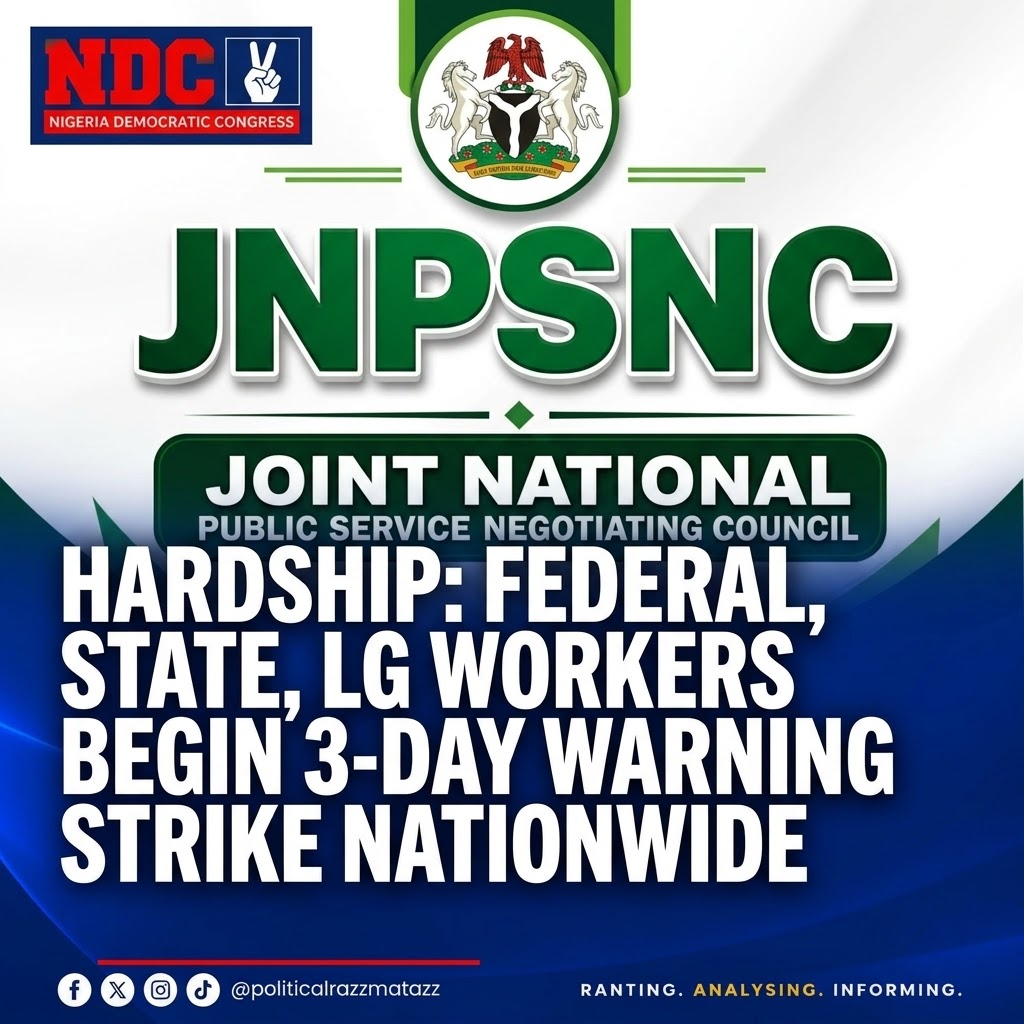
Public sector machinery across all 36 states, local government secretariats, and federal ministries in Abuja is grinding to a halt. Following the expiration of an ignored ultimatum, the Joint National Public Service Negotiating Council (JNPSNC) has directed all public servants to embark on a three-day nationwide warning strike beginning midnight on Friday, October 2, and running through Sunday, October 4, 2026.
As detailed in the Daily Post’s report on the nationwide strike order and corroborated by The Punch’s coverage of the workers’ ultimatum, the industrial action comes after the Federal Government failed to address union demands before the September 30 deadline.
Body dey pepper Nigerian workers well-well. With petrol prices hovering around ₦1,400 per litre and food inflation devouring earnings before pay slips arrive, the planned shutdown is not just an administrative grievance; it is a desperate survival alarm from the engine room of the Nigerian state.
The Breaking Point: What the Unions Are Demanding
According to circulars issued by union leadership, public servants at every administrative tier have reached their psychological and financial breaking point. As highlighted in Leadership’s coverage of the union circular, the JNPSNC emphasized that ordinary workers and vulnerable citizens are groaning under economic pressure that has made daily commutes a financial impossibility.
The council’s primary demands are explicit:
- Crashing Petrol to ₦500 per Litre: Reversing current retail pump prices down to ₦500 to halt runaway transportation costs and ease food logistics.
- Immediate Cost-of-Living Wage Award: Rolling out an emergency wage award to bridge the gap between stagnant pay packets and soaring market prices.
- Tripartite Minimum Wage Committee: Immediately convening a national tripartite committee to open negotiations on a new, realistic national minimum wage ahead of 2027.
When an entry-level worker spends more than half their monthly take-home pay on commercial buses simply to report to their desk, reporting for duty becomes a daily debt trap.
Anatomy of an Ultimatum Ignored
The current dispute has been brewing for weeks. The JNPSNC initially communicated its concerns to the Federal Government in a formal dispatch dated September 21, giving authorities until the close of business on September 30 to respond with actionable relief frameworks.
Instead of proactive engagement, the deadline elapsed in silence. By allowing the clock to run out without convening emergency mediation tables, the administration miscalculated the depth of labor anger.
As our people dey talk, who deaf to whisper go hear shout. When administrative channels produce zero relief, unions rely on their ultimate constitutional lever: withdrawing their labor. This nationwide warning strike is designed to signal that public servants refuse to quietly subsidize policy failures with their own hunger.
Between Fiscal Reality and Survival: Can the Government Deliver?
The impending shutdown places the administration in an acute policy dilemma.
On one hand, bringing fuel down to ₦500 per litre would require significant structural interventions, transparent domestic refining allocations, or direct price cushions—fiscal moves that treasury officials often resist.
On the other hand, the human cost of delay is catastrophic:
- Productivity Collapse: Civil servants struggling to feed their homes cannot deliver efficient public services or enforce state regulations.
- Brain Drain and Demoralization: Stagnant remuneration accelerates the exodus of technical experts, medical staff, and educators out of the public sector.
- Economic Stagnation: When public sector purchasing power dies, local markets, neighborhood vendors, and small transport businesses collapse along with it.
A three-day action over a weekend minimizes immediate weekday disruption, but it is deliberately calibrated as an opening salvo. If the government treats this warning with administrative indifference, it risks plunging the nation into an indefinite, full-blown general strike that will paralyze ports, courts, schools, and hospitals nationwide.
The Clock Is Ticking for Dialogue
Nigeria cannot afford a protracted standoff between the state and its own workforce. With the nationwide warning strike underway, all eyes turn to the Ministry of Labour, the Office of the Head of the Civil Service of the Federation, and economic managers to see whether they will replace bureaucratic silence with meaningful concessions.
Patience has run out. Civil servants are demanding tangible relief, not another advisory committee that produces lengthy reports while citizens skip meals.
What Do You Think?
Are the workers’ demands—especially reducing petrol prices to ₦500 and launching an immediate wage award—realistic in today’s economy? Will this warning action compel the Federal Government to return to the negotiating table, or is Nigeria heading toward an indefinite general strike?
Drop your candid thoughts, reactions, and economic perspectives in the comments below!