Why a US Firm Is Urging Global Lenders to Shut the Tap on Nigeria’s Debt Binge
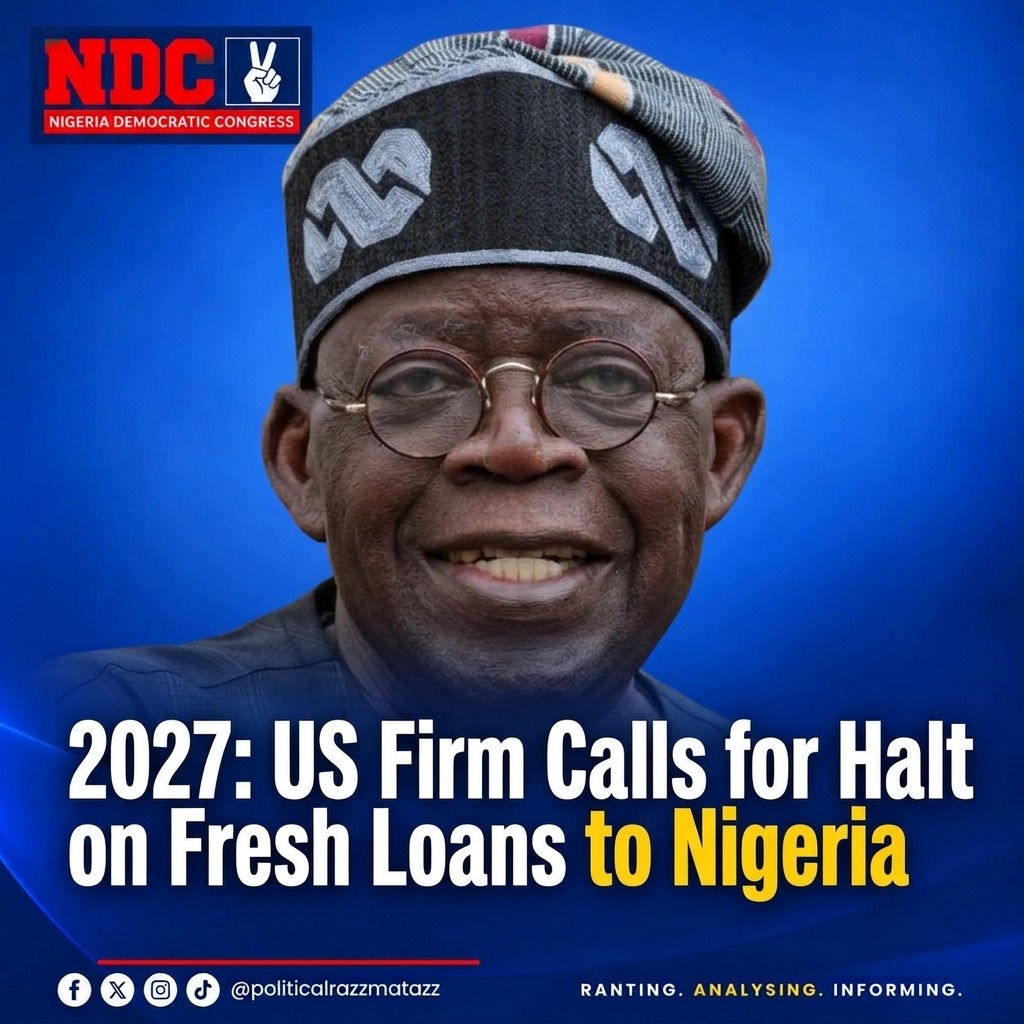
When foreign policy watchdogs and international advocacy groups begin openly lobbying multilateral creditors to turn off the financial tap on a sovereign republic, the fiscal warning sirens are no longer just buzzing—they are blaring at maximum volume.
That is the sobering reality confronting Nigeria under the All Progressives Congress (APC) administration. Washington-based advocacy firm, Von Batten-Montague-York, has formally called on international financial institutions—including the World Bank, the European Investment Bank (EIB), and France’s Agence Française de Développement (AFD)—to suspend all new loans to the Nigerian government ahead of the 2027 general elections.
As reported by Daily Post in their coverage of the US firm’s move, the firm raised serious alarms over Nigeria’s unsustainable debt trajectory and warned of the severe systemic risks of injecting billions of dollars in fresh external debt into an economy on the eve of a heated general election.
Borrow borrow make me fine, but na unborn children go pay the interest. For millions of Nigerians already crushed under unbearable cost-of-living pressures, this external call cuts straight to a bitter truth: Nigeria cannot continue digging itself into a deeper debt hole to finance opaque public spending.
The Timing Tells the Story: Pre-Election Slush Funds or Public Good?
In developing democracies, the timing of mega-loans is never neutral. When an administration begins aggressively pursuing billions of foreign dollars barely months before voters head to the ballot box, seasoned political observers smell a rat.
Historically, pre-election borrowing sprees in Nigeria rarely translate into completed hospitals, modern rail lines, or industrialized power grids. Instead, massive dollar inflows close to election cycles too often end up subsidizing:
- Artificial Currency Defense: Burning borrowed foreign reserves on short-term market interventions to create an illusion of exchange-rate stability before polling day.
- Patronage and Political Contracts: Awarding hastily conceived, non-essential contracts designed to enrich party loyalists and lubricate ruling-party campaign machineries.
- Unmonitored Cash Transfers: Rolling out cosmetic “palliatives” that vanish without trace or independent audit the moment election results are announced.
Von Batten-Montague-York’s petition to global lenders highlights this exact vulnerability. Injecting massive international liquidity into an unaccountable administrative pipeline just as the 2027 campaign kicks off is a recipe for fiscal recklessness.
Servicing Debt With Hunger: The Human Cost at Home
While treasury managers continue to defend borrowing by pointing to technical debt-to-GDP ratios, the reality on Nigerian streets tells an entirely different story.
According to fiscal data tracked by BusinessDay’s analysis on Nigeria’s mounting debt service ratio, the federal government continues to burn the lion’s share of its actual retained revenues simply servicing existing obligations. When a nation spends nearly all its earned income paying interest on past loans, it has no headroom left to fund healthcare, quality education, or critical rural infrastructure.
The consequences are visible everywhere:
- Crippling Hardship: Retail petrol remains stranded at extortionate heights above ₦1,300 per litre, sparking the recent nationwide 3-day public sector warning strike.
- Vanishing Purchasing Power: Real wages have been decimated by hyperinflation, leaving civil servants and market traders unable to feed their households.
- Zero Accountability: While ordinary Nigerians are lectured daily on the need to make sacrifices, the machinery of government remains bloated with executive luxuries, foreign junkets, and endless borrowing.
Taking fresh multibillion-dollar loans in the middle of this macroeconomic crisis is not economic strategy; it is intergenerational sabotage.
The NDC Alternative: Moving From Consumption to Production
The call to halt fresh loans exposes the urgent need for a clean break from the APC’s debt-fueled economic model. This is where the governance philosophy of the Nigeria Democratic Congress (NDC) offers a clear and practical contrast.
Under the institutional guidance of figures like National Leader Senator Henry Seriake Dickson—who has consistently used his platform to advocate for fiscal federalism, constitutional restraint, and sub-national self-reliance—the NDC rejects the addiction to external borrowing for consumption.
Together with presidential candidate Peter Obi and vice-presidential running mate Senator Rabiu Musa Kwankwaso, the NDC platform has consistently maintained that Nigeria’s salvation lies in a structural shift:
- Halting Unproductive Borrowing: Shutting down foreign loans that end up financing government consumption or questionable recurrent expenditures.
- Cutting the Cost of Governance: Aggressively pruning duplicate ministries, agencies, and elite entitlements to free up domestic capital for public investment.
- Plugging Systemic Leakages: Demanding total transparency in crude oil accounting and blocking treasury drainpipes before asking citizens to endure austerity.
- Unlocking Grassroots Production: Channeling resources directly into micro, small, and agricultural enterprises rather than relying on multilateral hand-outs.
As Senator Dickson has demonstrated throughout his public career, sustainable state-building is founded on institutional discipline and living within your means—not running around global capitals with a begging bowl while local wealth is squandered.
Will the World Bank and IMF Listen?
International financial institutions cannot afford to be complicit in the worsening economic subjugation of the Nigerian people. Providing unconditional loans to an administration facing widespread public discontent over economic mismanagement, right on the doorstep of the 2027 general elections, risks undermining what remains of democratic accountability.
If the Bretton Woods institutions genuinely care about long-term stability and good governance in West Africa, they must heed the warning. The priority for Nigeria today is not acquiring more debt to be looted; it is demanding transparency, halting financial waste, and holding public officials to the highest standards of stewardship.
What Do You Think?
Should international lenders immediately freeze all new loans to the Federal Government until after the 2027 elections, or does Nigeria genuinely need these external credit lines to keep public infrastructure moving? How do you rate the APC administration’s borrowing record compared to the production-driven vision of the NDC?
Drop your candid thoughts, economic takes, and predictions in the comments below!