


Zero Active Cases, ₦10 Billion Gone
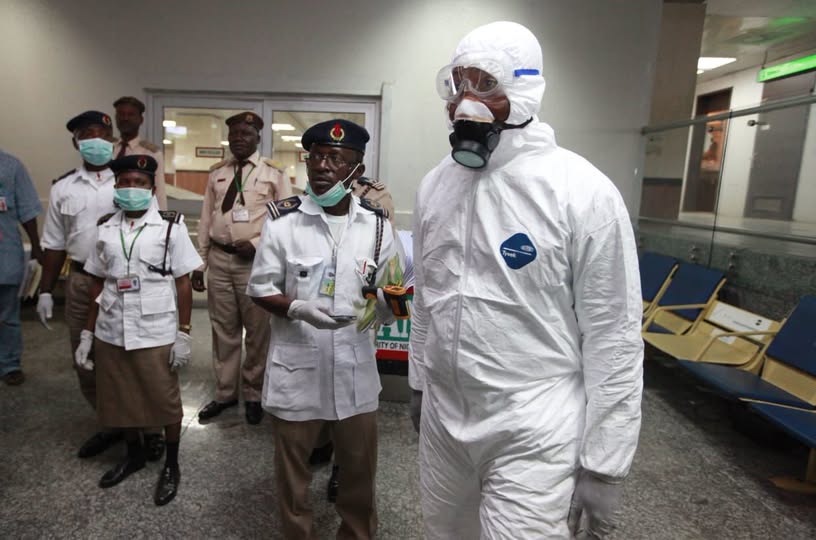
According to official declarations from the World Health Organisation (WHO) and Nigeria’s Ministry of Health, the Federal Republic of Nigeria currently has zero active cases of Ebola.
Following the swift medical evacuation of the country’s index patient—a traveler who arrived from Uganda—alongside her asymptomatic spouse to Switzerland, WHO Regional Director for Africa, Prof. Mohamed Janabi, and Coordinating Minister of Health and Social Welfare, Prof. Muhammad Ali Pate, confirmed that transmission has been halted and no new cases have been recorded.
Yet, in a bizarre spectacle that perfectly illustrates the broken priorities of the All Progressives Congress (APC) administration, an eye-watering ₦10 billion emergency fund was reportedly unlocked, with 44 contacts placed under surveillance receiving a cool ₦100,000 weekly stipend just to remain at home.
Person dey nurse ordinary catarrh, government dey release billions go buy specialized oxygen tank.
While the swift containment of a deadly pathogen is a relief to every citizen, the financial bonanza surrounding this episode exposes an administration that views public health not as a sacred social duty, but as a convenient pipeline for emergency cash diversions.
₦100,000 a Week for Contacts While Doctors Beg for Hazard Allowance
The arithmetic of this intervention is as insulting as it is surreal.
To pay 44 individuals ₦100,000 weekly amounts to ₦400,000 a month per person—substantially higher than the hard-fought national minimum wage, and far above the take-home pay of the resident doctors, nurses, and laboratory scientists who actually risk their lives on the infectious disease frontline.
Even if 50 contacts were paid ₦100,000 every single week for the entire standard 21-day or 42-day surveillance window, the total disbursement barely scratches ₦30 million.
Where on earth is the rest of the ₦10 billion going?
The index patient who required intensive clinical care and organ-support therapy is no longer on Nigerian soil; she and her husband are receiving specialized medical management in Switzerland. There are no isolation wards to build, no massive hospitalization bills to offset, and no nationwide quarantine camps to maintain. Yet, billions of Naira of taxpayer money have evaporated into an opaque bureaucratic vortex under the guise of “rapid containment.”
The Bitter Contrast: Death by Preventable Ailments at the Grassroots
What makes this multi-billion-naira emergency spend unbearable is the horrifying state of healthcare facilities where ordinary Nigerians go to die every single day:
- Empty Dispensaries: Across thousands of primary healthcare centers in rural and semi-urban communities, nurses cannot even dispense basic paracetamol, oral rehydration salts, or sterile cotton wool.
- Maternal Mortality Crisis: In public general hospitals, pregnant women in active labor are routinely turned away or forced to purchase their own surgical gloves, delivery sheets, and fuel for hospital generators before being admitted.
- Collapsed Infrastructure: Across public teaching hospitals, diagnostic machines like MRI scanners and CT machines are perpetually broken down, forcing poor patients to patronize private diagnostic labs at crippling costs.
When an everyday Nigerian collapses from malaria, typhoid, pneumonia, or a roadside accident, authorities claim the treasury is completely dry. But the moment an international disease headline appears, the government magically conjures up ₦10 billion overnight.
Clinic for village no get common syringe or drip stand, but billions dey fly enter private pockets for sickness wey Swiss doctors dey treat.
The Reckoning Ahead of 2027
Nigerians cannot continue to bleed under an economic regime that imposes punitive taxes, utility hikes, and ₦1,900 petrol on the poor, only to celebrate billion-naira emergency bonanzas behind closed doors.
Zero active cases of Ebola is a medical victory for public health personnel. But spending ₦10 billion while the rest of the country’s hospitals lie in ruins is a moral disgrace. Ahead of 2027, the Nigerian people have both the duty and the power to reject this culture of emergency exploitation and demand leadership that values human life every single day of the year.
What Do You Think?
How can the Federal Government justify spending ₦10 billion on an outbreak with zero active cases while local primary health centres lack basic drugs, electricity, and functional ambulances? Does this confirm that “emergency spending” has become another excuse for elite budget diversion?
Drop your candid perspectives, observations, and reactions in the comments below!