





How Aminu Gwarzo and the NDC Are Redefining Leadership at 66
As Nigeria marks its 66th Independence anniversary, the national atmosphere feels far removed from celebration. Across cities and rural communities, ordinary citizens are battling crushing economic realities: petrol selling at unprecedented highs, food costs climbing beyond reach, and security concerns keeping farming communities on edge.
Yet, tuned to national broadcasts and political channels, what the public receives instead is a barrage of contradictions. On one side, the ruling establishment serves up phantom promises of relief—like unverified transport discounts that fail to materialize at actual bus stops. On the other side, various political factions spend their hours calling each other out, trading personal insults, and staging media theatrics.
While political heavyweights dey trade grammar and throw blame up and down, na ordinary citizens dey feel the heat for market.
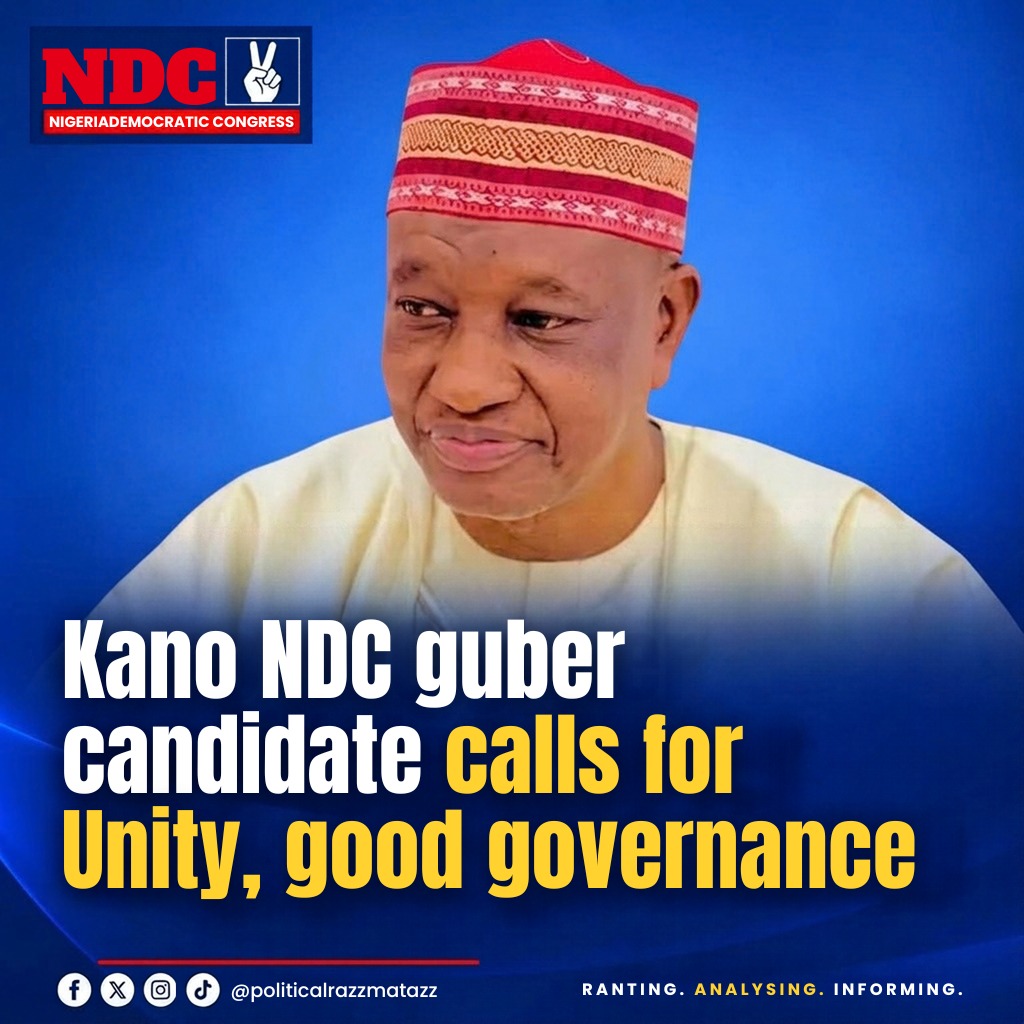
Cutting straight through this toxic distraction, the Kano State governorship candidate of the Nigeria Democratic Congress (NDC), Comrade Aminu Abdussalam Gwarzo, delivered an Independence Day address that shifts the conversation back to where it belongs: unity, accountability, and the shared responsibility of building a better future.
Beyond Phantom Relief and Mutual Recriminations
For millions of Nigerians, October 1 is no longer about parades or empty ceremonial speeches. It is a sobering mirror reflecting the gap between Nigeria’s vast potential and its painful everyday realities.
While other political actors remain trapped in a cycle of trading accusations and offering cosmetic palliatives that vanish the moment the cameras turn off, Gwarzo’s message cuts in a different direction. He noted that independence cannot be treated as an annual photo-op; it is a permanent moral demand that leadership must serve the people, that democracy must unite rather than polarize, and that governance must restore human dignity, security, and genuine economic hope.
True sovereignty does not mean replacing foreign colonial administrators with local rulers who treat public resources as personal entitlements. It means constructing an environment where every citizen, regardless of status or background, has a practical stake in national progress.
The Kano Imperative: Leadership That Truly Listens
As the commercial and political heartbeat of Northern Nigeria, Kano State occupies a pivotal position in determining the direction of the republic. But the challenges facing the ancient commercial city are immense:
- Crippled Small Businesses: Artisans, textile merchants at Kantin Kwari, and grain dealers at Dawanau market are suffocating under unbearable energy and logistics costs.
- Youth Unemployment: Millions of energetic young people are seeking functional skills and dignified employment rather than seasonal political handouts.
- Social Cohesion: Political divisions have too frequently been weaponized to split communities that have coexisted for generations.
Drawing from his extensive public service experience—documented on Aminu Abdussalam Gwarzo’s public profile—the seasoned administrator emphasized that the path ahead demands leadership that listens to the people, respects every demographic, and commits wholeheartedly to development and inclusive governance.
Gwarzo reminded citizens that political rivalries must never become barriers to peaceful coexistence. In a pluralistic society like Kano, diversity is an asset to be harnessed for economic revitalization, not a wedge for partisan hostility. A secure, prosperous Kano is only possible when young people feel protected, entrepreneurs feel supported, and communities see transparency in how their state is managed.
The NDC Difference: A Better Nigeria for All
The contrast between the NDC’s posture and the broader political landscape is striking. While legacy platforms are paralyzed by infighting, litigation, and broken promises, the NDC is intentionally focused on offering a credible, workable alternative for all Nigerians.
Under the party’s platform, nation-building is treated as serious structural work:
- Ending the Blame Game: Rather than wasting momentum on endless finger-pointing, the NDC insists on policy-driven engagement that addresses insecurity, cuts bloated governance spending, and restarts domestic production.
- Empowering the Grassroots: Governance must start from the ward up, ensuring that public resources translate into schools, functional health centers, and feeder roads rather than elite luxuries in government houses.
- Anchoring Democratic Values: As demonstrated by national leaders like Senator Henry Seriake Dickson, presidential candidate Peter Obi, and running mate Rabiu Musa Kwankwaso, the NDC remains committed to institutional order, constitutional checks, and preserving inclusive governance as the only path to national rebirth.
When leaders prioritize character over ego and structural reform over propaganda, citizens no longer have to depend on seasonal, unfulfilled palliatives.
The Road Ahead Demands Collective Resolve
Nigeria’s 66th anniversary is a reminder that national salvation will not arrive through elite benevolence or viral media shouting matches. It will be built by citizens who demand accountability, reject tribal manipulation, and organize around leadership with proven integrity.
Comrade Aminu Abdussalam Gwarzo’s call provides a blueprint for that renewal: a united Kano, a stronger Nigeria, and a future built on transparent public service. The road ahead requires participation, discipline, and an unshakeable commitment to progress.
What Do You Think?
While other parties focus on traded insults and empty promises, can the NDC’s vision of unity and inclusive governance transform states like Kano ahead of the 2027 elections? What should be the primary priority for leaders addressing the current economic hardship?
Share your candid thoughts, observations, and perspectives in the comments below!