





₦500,000 Minimum Wage: Populist Dream or Economic Possibility?
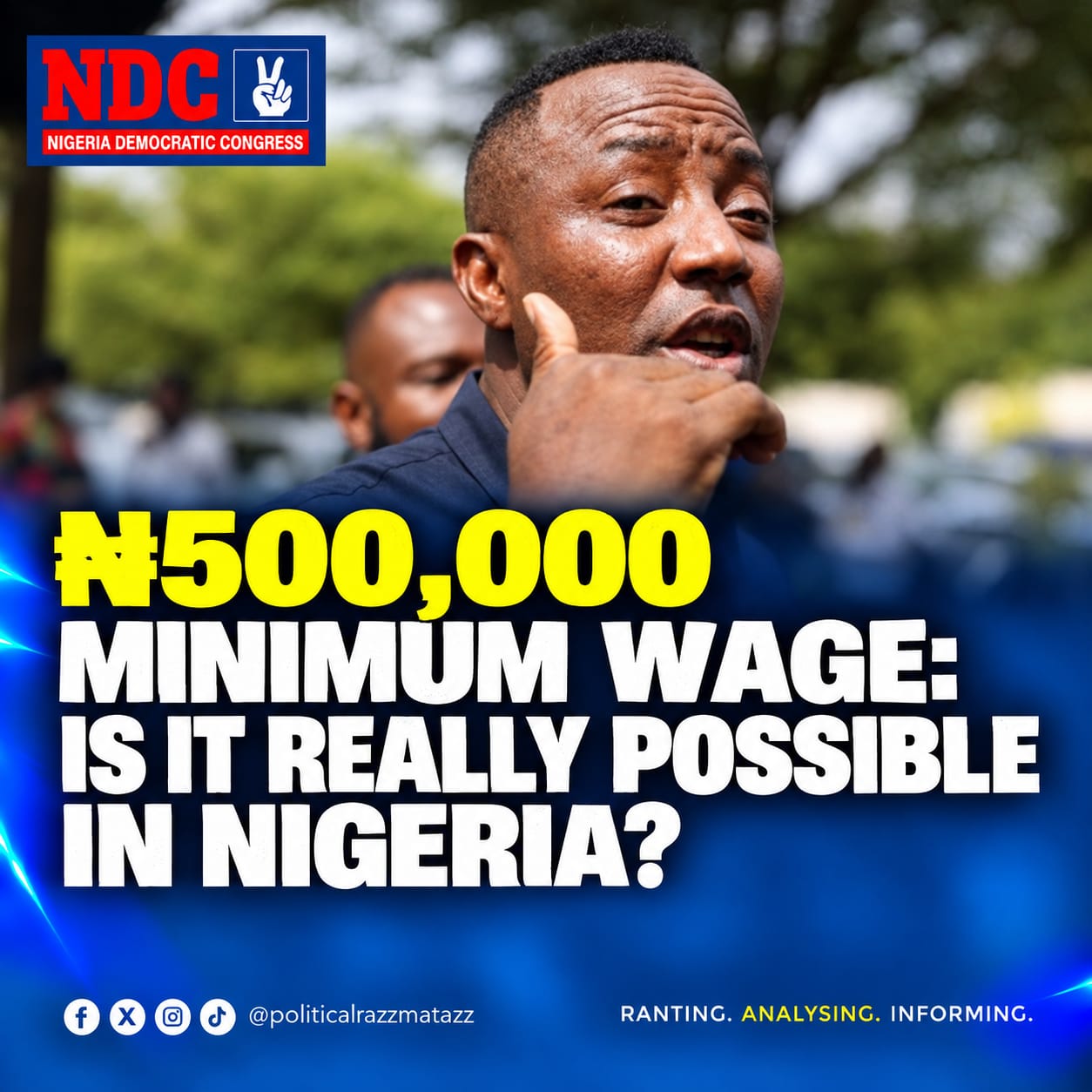
When African Action Congress (AAC) presidential candidate Omoyele Sowore reignited the national conversation by demanding a ₦500,000 monthly pay package for Nigerian workers, public reactions were immediate and divided.
As captured in the Daily Post report on Sowore’s wage proposal and his broader policy interview covered by Punch on his wage and energy agenda, the activist argued that if federal lawmakers and political office holders can consume millions in monthly allowances, paying everyday citizens a livable salary is a matter of basic justice.
On the streets, working-class Nigerians nodded in furious agreement. Market woman no dey ask whether you be civil servant or private employee; once petrol, bag of rice, and rent climb up, na everybody pocket dey bleed. Yet in boardrooms and finance ministries, economists broke out in cold sweats.
The debate goes far beyond catchy campaign slogans: can Nigeria actually deliver a realistic living wage of half a million naira without accidentally blowing up its own currency?
The Worker’s Dilemma: Why ₦500,000 Feels Justified
To understand why a ₦500,000 proposal resonates, one only needs to examine the breakdown of average household expenses in cities like Lagos, Abuja, Port Harcourt, or Kano:
- Food Security: With food inflation hovering at historic highs, feeding a family of four decent meals often gulps well over ₦150,000 a month.
- Transportation & Energy: After multiple petrol price hikes, commuting to work five days a week easily costs workers tens of thousands of naira before they even take their first sip of morning tea.
- Rent and Basic Healthcare: Annual rent and routine medical emergencies have turned survival into an Olympic sport.
When evaluated against day-to-day cost of living figures, ₦500,000 is not luxury money; it is what many consider the baseline for human dignity. If paychecks remain flat while utility tariffs and consumer prices shoot into the stratosphere, the conversation around establishing a realistic living wage becomes an existential necessity for public health and social peace.
The Economic Catch: The Risk of the Wage-Price Spiral
Here lies the painful economic headache: numbers on a paycheck are meaningless if they are not backed by real goods and services. If government agencies and private firms merely print or disburse paper notes without a corresponding jump in national productivity, disaster follows.
- Fiscal Strain on States: Several sub-national governments already struggle to meet basic payroll obligations without borrowing. A sudden jump to ₦500,000 could force state treasuries into bankruptcy or prompt mass retrenchments in the civil service.
- Small Business Shock: Micro, Small, and Medium Enterprises (MSMEs) form the backbone of Nigeria’s employment. Forcing a neighborhood bakery, school, or tech startup to pay an entry-level wage of half a million naira without subsidized power or cheap credit will simply cause them to shut their doors.
- Runaway Inflation: If hundreds of billions of new naira flood the market while food production remains paralyzed by insecurity, traders will simply hike prices to match the new purchasing power.
The central challenge is turning a realistic living wage into actual buying power rather than paper money chased away by runaway inflation.
The Road Ahead: How to Make Real Wages Count
If Nigeria is ever going to deliver a realistic living wage without triggering wild inflation, policy makers must stop putting the cart before the horse:
- Cut the Cost of Governance First: Before lecturing citizens on why ₦500,000 is impossible, political elites must dramatically slash legislative allowances, administrative overheads, and bloated executive fleets.
- Fix Basic Infrastructure: Provide uninterrupted electricity and rebuild agrarian feeder roads. When the cost of doing business drops, private employers can naturally afford better salaries.
- Crush Food Insecurity: Secure rural farmlands so that farmers can return to the fields, driving food prices down so every naira in a worker’s pocket retains genuine purchasing power.
Without structural discipline and accountable governance, a ₦500,000 minimum wage will remain an empty political football. With upright leadership, however, Nigeria can build an economy where workers earn with dignity and live with security.
What Do You Think?
Is a ₦500,000 minimum wage feasible right now if the government cuts frivolous political spending, or is it an unrealistic promise that would crash the economy? Share your honest views and calculations in the comments below!