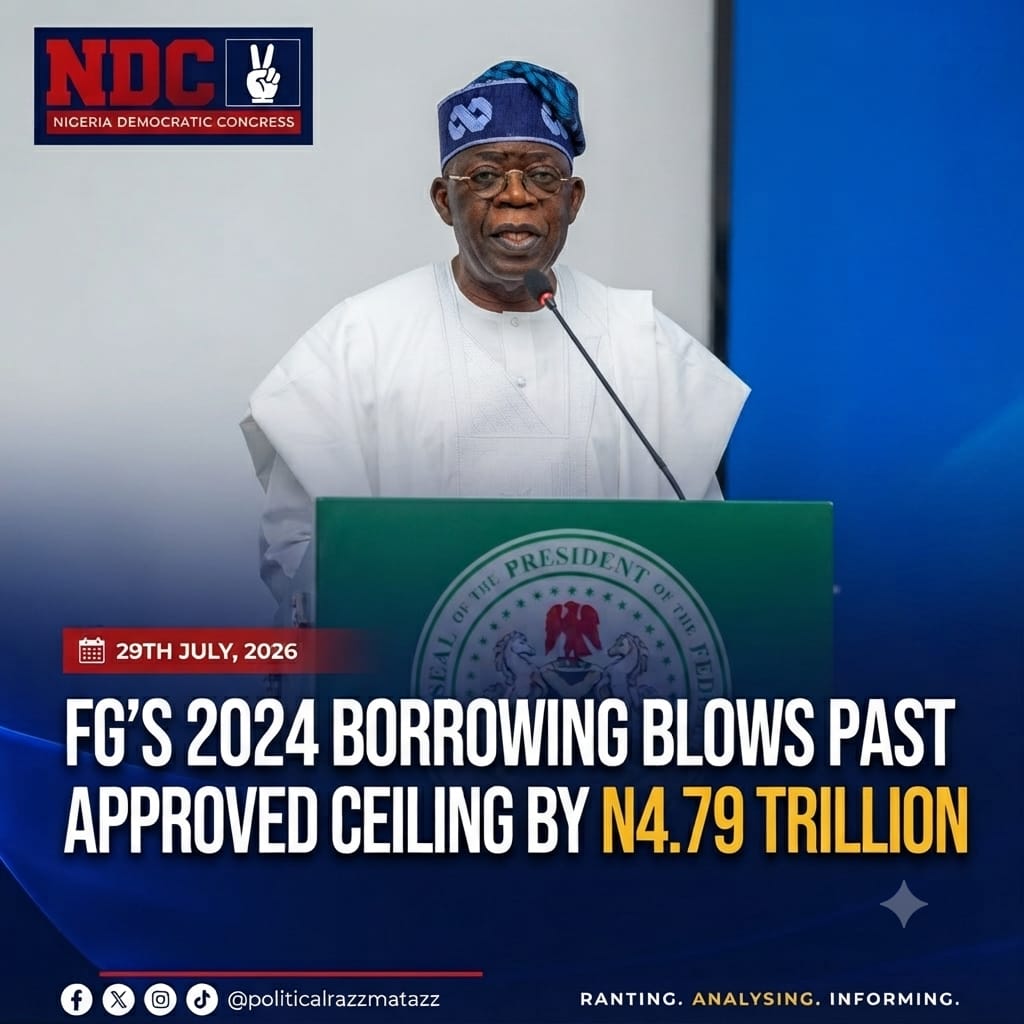
FG Blows Past Approved 2024 Borrowing Limit by ₦4.79 Trillion
(By The Political Razzmatazz Editorial Team | Economic Updates)
Nigeria’s financial records have revealed a massive gap that is raising serious questions about government spending and financial discipline.
According to official figures released by the Budget Office of the Federation, the Federal Government borrowed a total of ₦12.62 trillion in 2024. This figure completely shattered the officially approved borrowing ceiling of ₦7.83 trillion, leaving an unapproved excess of ₦4.79 trillion.
The Breakdown of the Numbers
To put this massive borrowing into perspective, here is how the figures stack up:
- Approved Borrowing Limit: ₦7.83 trillion
- Actual Amount Borrowed: ₦12.62 trillion
- Unapproved Excess Borrowing: ₦4.79 trillion
This is not just a small accounting mistake or a minor gap in the budget. Crossing an approved limit by nearly ₦5 trillion shows a huge gap between planned spending and actual spending.
Why This Should Worry Everyday Nigerians
For a country already struggling under a very heavy national debt burden, this huge increase in public debt comes with serious risks:
- Weak Checks and Balances: It raises major questions about how the government handles its budget limits and why the checks meant to control overspending failed.
- Pressure on Future Revenue: Borrowing more money means the country will spend a larger portion of its future revenue just to service and repay loans, leaving less money for critical infrastructure, healthcare, and education.
- Fiscal Discipline: International investors, financial institutions, and everyday citizens rely on budget limits to judge if a government is managing public funds responsibly. Exceeding these limits damages financial trust.
What Comes Next?
As economic experts and civil society groups closely watch this development, many are calling on the National Assembly and financial regulators to demand clear answers from the Ministry of Finance and the Budget Office.
Nigerians deserve to know why the spending limits were ignored, where the extra ₦4.79 trillion went, and how the government plans to bring public debt back under control.
What are your thoughts on this massive over-borrowing? Let us know in the comments section below!