
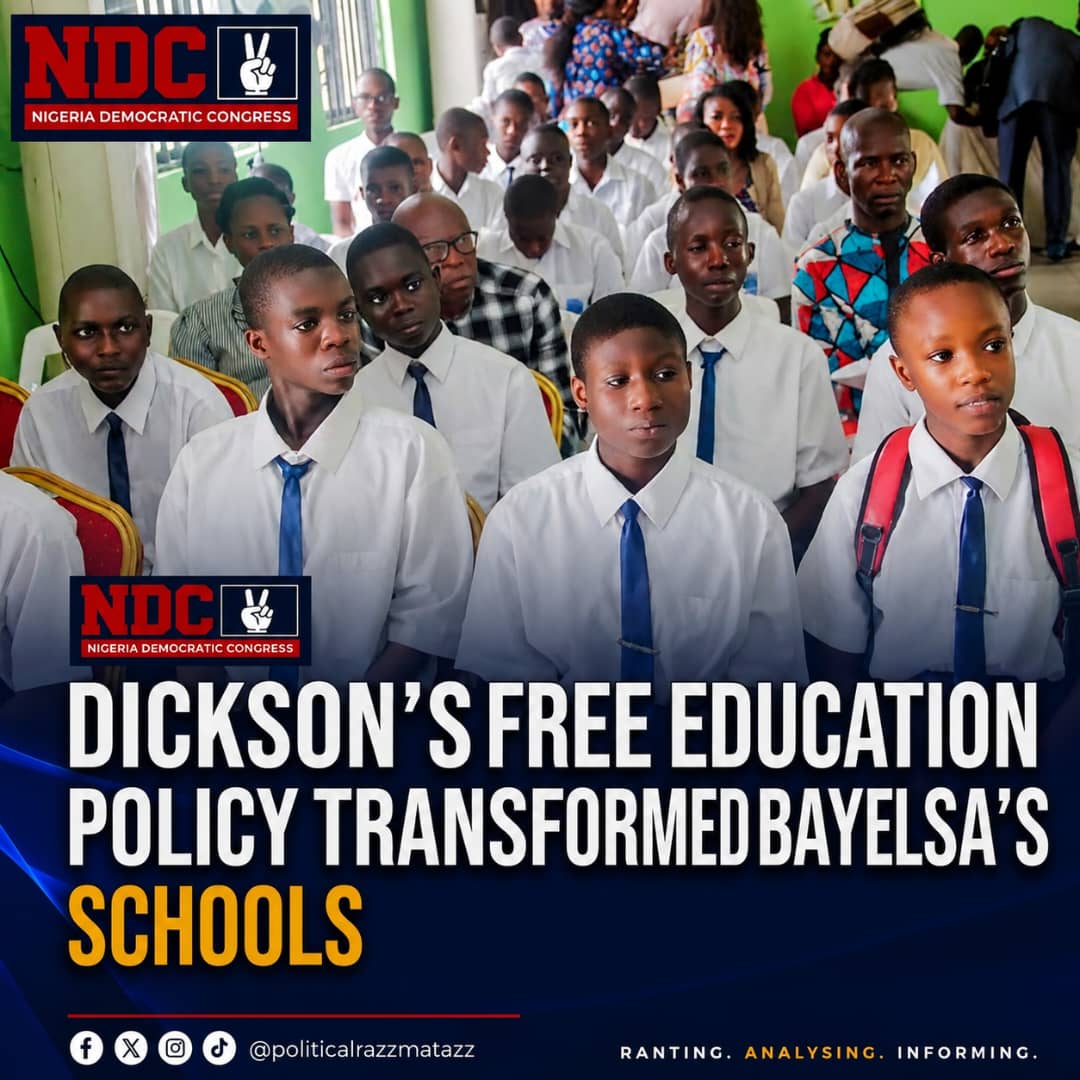
How Dickson’s Free Education Policy Transformed Bayelsa’s Schools
(By The Political Razzmatazz Editorial Team | Education & Governance)
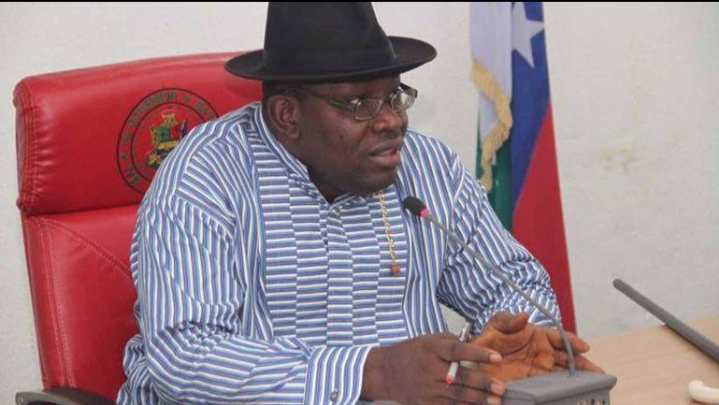
When politicians make campaign promises, many citizens expect those promises to gather dust as soon as the elections are over. However, on his very first day in office in February 2012, former Bayelsa State Governor Henry Seriake Dickson made a bold declaration that changed the state forever.
He announced a policy of free and compulsory education for every Bayelsan child, starting from primary school all the way through the post-primary level. Over the next six years, this was not just empty political rhetoric; it became one of the defining pillars of his administration, backed by massive financial investments.
Here is how the Dickson administration completely reshaped the educational system in Bayelsa.
Backing the Promise with Real Infrastructure
The free education policy came with a huge physical transformation to match its high ambition. The government understood that free education means nothing if the learning environment is poor.
To fix this, the administration took several major steps:
- Massive Facility Upgrades: Schools across the entire state saw significant renovations and upgrades to their facilities.
- Teacher Training: Teachers were put through structured training and certification programs to raise classroom standards and improve the quality of learning.
- New Boarding Schools: The government built brand-new public boarding schools. This gave students—especially those living in remote and difficult riverine communities—a real shot at quality education without the heavy burden of taking long, dangerous daily commutes.
Breaking the Financial Barrier
Before this policy, the high cost of tuition and other school-related fees had locked many Bayelsan families out of the education system altogether.
By making education totally free, the Dickson administration completely removed this financial barrier. This single move brought thousands of out-of-school children back into the classrooms, particularly girls and children from low-income households who previously could not afford to learn.
The Measurable Results
The results of this heavy investment were highly measurable. Historically, Bayelsa was a state that seriously struggled in national examination rankings.
However, during Dickson’s tenure, there was a dramatic turnaround in student performance. The state climbed the charts, moving into a much more competitive and respected standing nationally.
Today, this policy remains one of the clearest examples in Nigeria of how sustained policy commitment—rather than short-term political gestures—can successfully reshape the outcomes for an entire generation of students.
What do you think about this free education policy? Should more states adopt this exact model? Share your thoughts with us in the comments section below!