




The Restoration Agenda That Rebuilt Bayelsa’s Infrastructure
(By The Political Razzmatazz Editorial Team | Infrastructure & Governance)
When Henry Seriake Dickson took office as Governor of Bayelsa State in 2012, he made a very bold promise. He told the people that he would turn the state into “a construction site.”
By the time his eight-year tenure ended, he had successfully made good on that promise. His administration, which was famously branded the Restoration Agenda, delivered a long and impressive list of major infrastructure projects that completely reshaped the state.
Here is a look at how this agenda rebuilt Bayelsa.
A Massive Leap in Infrastructure
Before Dickson’s administration, many citizens felt the state lacked the basic structures expected of an oil-rich region. To fix this, his government embarked on a massive building spree. Some of the major projects delivered include:
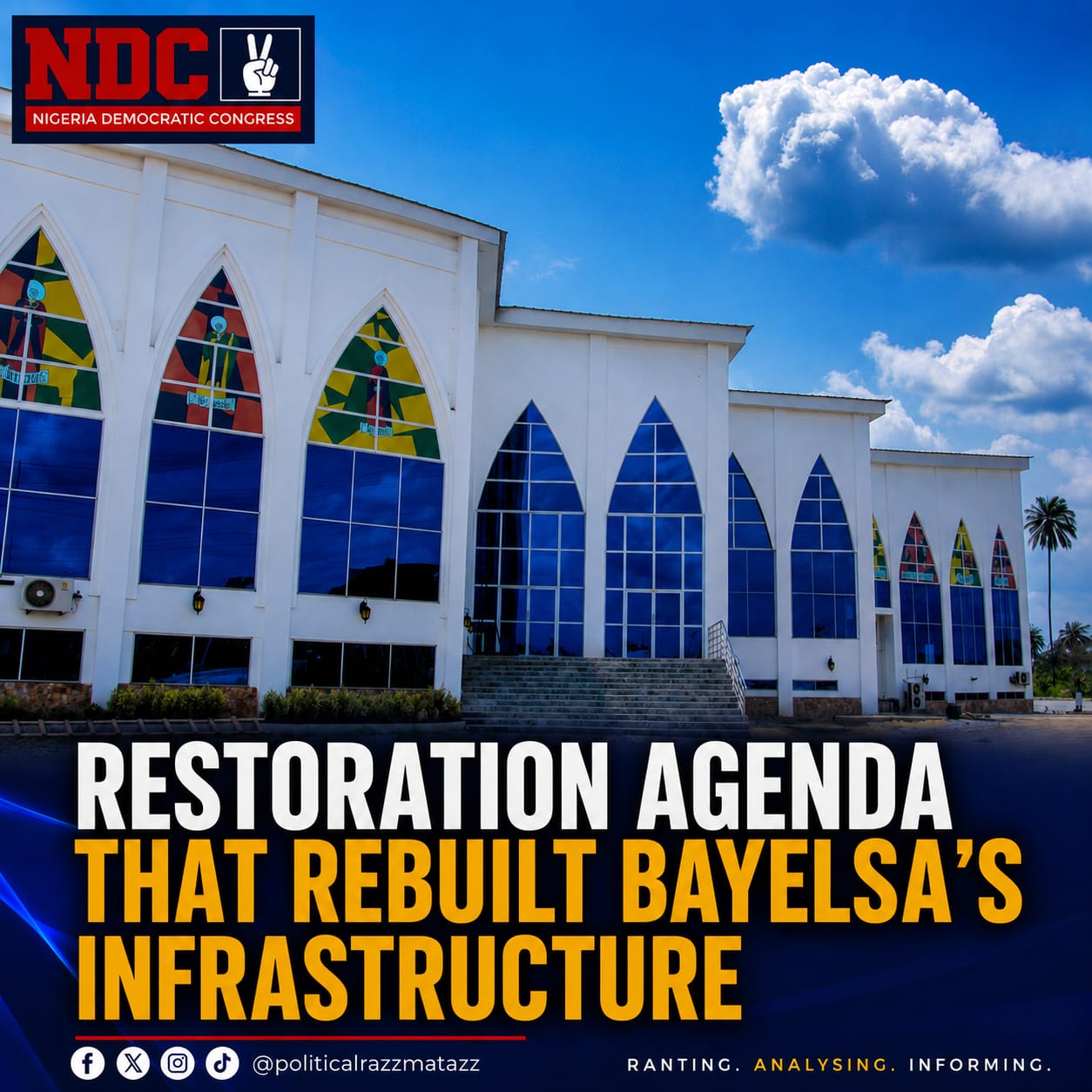
- The Ecumenical Centre: A grand building that became a central point for state events.
- The New Governor’s Office Complex: A modern and well-equipped facility for the state’s executive branch.
- The Oxbow Lake Pavilion: A project that boosted tourism and provided a beautiful recreational space for citizens.
- The Multi-Door Court House: A vital addition to the state’s legal and justice system.
- New Secretariat Blocks: Providing proper office spaces for state civil servants.
- A Heliport Terminal: Improving transport and accessibility for high-level operations.
Changing the Face of Bayelsa
These were not just random buildings. It was infrastructure development on a scale that previous administrations had never even attempted.
The Restoration Agenda was built on a very clear vision: to open up the state for investment, create jobs, and improve the quality of life for the average Bayelsan.
This heavy investment in real, physical structures successfully reshaped how the state functioned internally. It also completely changed how Bayelsa was perceived nationally—moving its reputation away from just being an “oil state” to a modern, developing hub with solid infrastructure.
What do you think was the most important project delivered under the Restoration Agenda? Let us know in the comments below!