

Abuja Politicians and the Fall of the APC in Osun
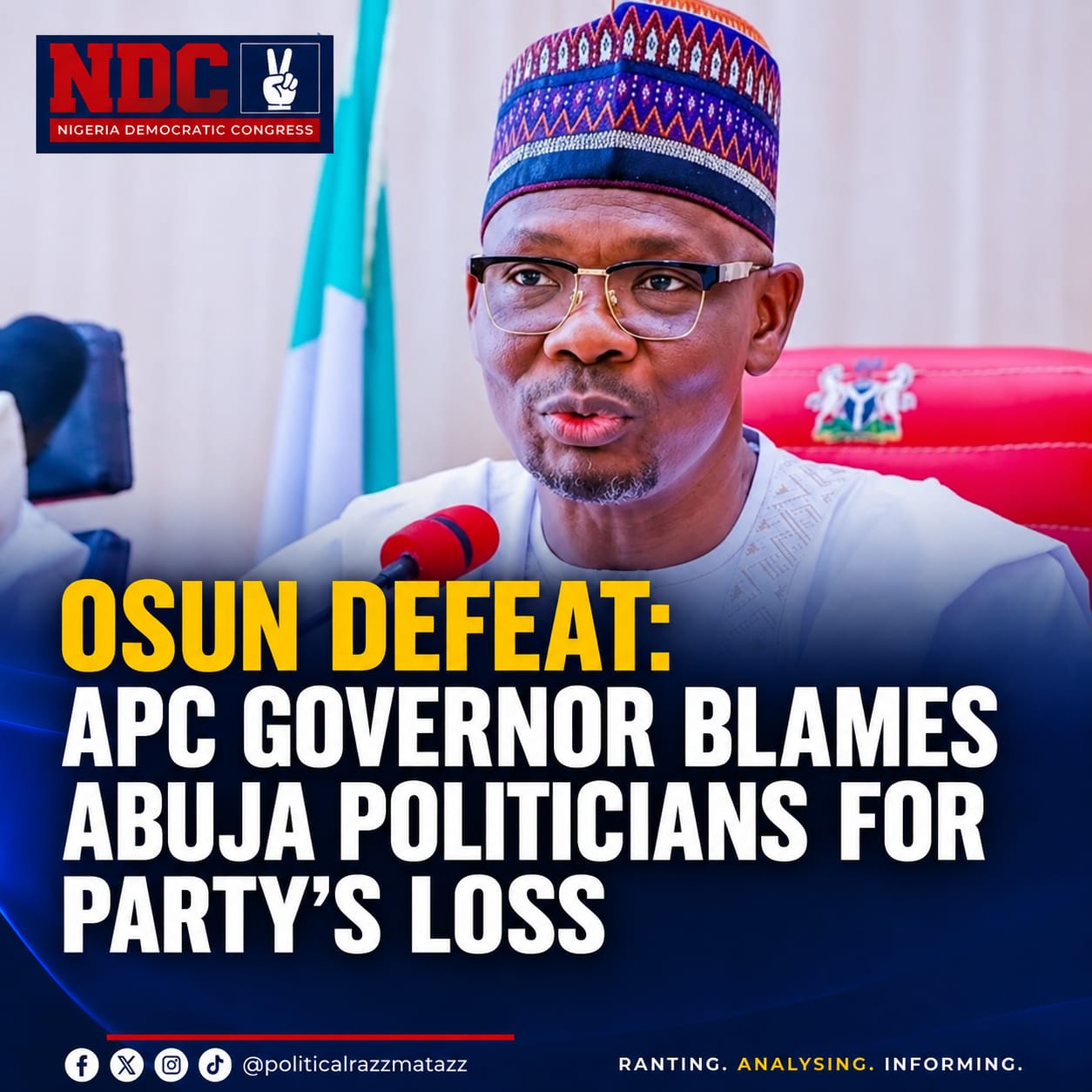
Nasarawa State Governor, Abdullahi Sule, has recently stated that Abuja politicians are largely to blame for the All Progressives Congress (APC) losing the Osun governorship election. The influence of Abuja on state matters is becoming a central point of discussion.
According to Governor Sule, the APC was in a strong position, but the interference from certain Abuja politicians disrupted the local strategy. When Abuja gets too involved in local state elections, it can clearly backfire.
The Interference from Abuja
Governor Sule emphasized that there was “no way for APC to lose in Osun” if it were not for the late actions of some politicians who came down from Abuja. These Abuja figures intervened shortly before the election, changing the local dynamics.
This admission highlights a growing concern within the party: the heavy-handed influence of Abuja on state-level politics. When decisions are driven by Abuja rather than local realities, the results can be disastrous for the party at the grassroots level.
The Power of Incumbency vs. Abuja Influence
While blaming Abuja for the internal disruption, Sule also acknowledged that Governor Ademola Adeleke ran a strong campaign. Adeleke secured another term with 511,067 votes, defeating the APC’s Bola Oyebamiji, who received 444,815 votes.
Sule noted that the power of a sitting governor is strong, but the internal chaos caused by Abuja politicians made the APC’s task impossible. The disconnect between the local party members and the Abuja elites proved fatal.
The Warning to Abuja Ahead of 2027
This situation in Osun raises serious questions for the APC as they look toward the 2027 elections. If Abuja politicians continue to overpower local structures, the party’s internal unity will suffer.
The lesson from Osun is clear: the APC must limit the interference of Abuja politicians in state matters if they hope to withstand opposition pressure in the future. Abuja must learn to trust local leadership.