





Can the Judiciary Deliver Neutrality in Tinubu’s 2027 Eligibility Battle?
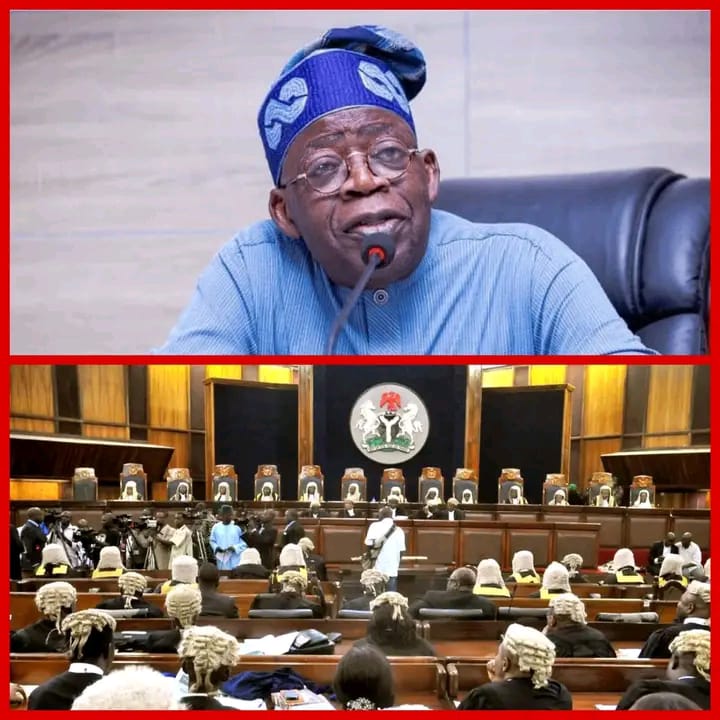
Just as political parties began strategizing their roadmaps for 2027, the Federal High Court in Abuja dropped a legal bombshell that reopened an explosive constitutional eligibility question that could redefine the race to Aso Rock.
Presiding Judge Inyang Ekwo granted an ex parte application allowing court documents to be served on President Bola Ahmed Tinubu via substituted means through the national secretariat of the All Progressives Congress (APC). The order came after process servers reported practical roadblocks in serving originating documents directly on the President.
As detailed in the Premium Times report on the substituted service ruling, the lawsuit—spearheaded by former Vice President Atiku Abubakar and the African Democratic Congress (ADC)—demands the disqualification of the President from seeking re-election in 2027.
Serving originating processes on a sitting president inside the villa no be small bean. But beyond the procedural victory of substituted service, the case cuts straight to the credibility of Nigeria’s judicial system: can the bench adjudicate without fear or favour when the highest office in the land is on the line?
The Anatomy of the Allegations
At the core of this constitutional eligibility question lies Section 137(1)(j) of the 1999 Constitution (as amended), which explicitly disqualifies any candidate who presents a forged certificate to the Independent National Electoral Commission (INEC).
The plaintiffs’ case, documented in THISDAY’s coverage of the eligibility suit, centers on the following contentions:
- The Disputed Discharge Document: The plaintiffs allege that a National Youth Service Corps (NYSC) discharge certificate bearing the name “Tinubu Bola Adekunle” does not genuinely belong to the President.
- Historical Scrutiny: They argue that these discrepancies trace back through past INEC filings and breach constitutional declarations.
- Disqualification Reliefs: The suit seeks an order barring both President Tinubu and the APC from fielding his ticket for the 2027 general election.
The defense, however, has already built formidable legal fortifications. As reported in The Guardian’s legal update on the proceedings, Senior Advocates of Nigeria Akin Olujinmi and Wole Olanipekun have pushed back aggressively.
The defense argues that the suit is fundamentally incompetent, statute-barred, and that the opposition lacks legal standing under the Electoral Act to meddle in APC affairs. Crucially, the defense maintains that forgery is a criminal charge requiring strict proof beyond reasonable doubt, emphasizing that the NYSC has issued no official disclaimer revoking or disowning the President’s service records.
Can the Judge Deliver Fair and Fearless Justice?
Whenever a sitting commander-in-chief faces judicial scrutiny, public skepticism peaks. Nigerians have seen technicalities swallow substantial constitutional grievances time and time again.
Navigating this constitutional eligibility question requires the court to rise above partisan heat. The judiciary is operating under a microscope:
- The Pressure of Technicalities: Will the suit be thrown out on procedural objections like locus standi and filing deadlines, or will the court examine the documentary evidence on its merits?
- Executive Clout vs. Judicial Independence: Handling a case that directly threatens an incumbent’s second-term ambition tests the institutional autonomy of the Federal High Court.
- Public Perception: Everyday citizens often assume that high-profile political disputes have predetermined outcomes. The presiding judge carries the burden of delivering a transparent, unassailable verdict that commands respect regardless of who wins.
Lawyer fit blow plenty grammar, but na facts and clear evidence dey settle court matter. If the bench wants to rebuild public confidence, every ruling must be thoroughly anchored in demonstrable jurisprudence rather than convenient loopholes.
What the Outcome Means for Tinubu’s 2027 Ambition
The resolution of this constitutional eligibility question carries massive implications for the 2027 race:
- If the Court Dismisses the Suit: A clean victory on preliminary objections will vindicate the President’s legal team, extinguish a nagging opposition talking point, and clear the runway for an aggressive 2027 re-election campaign.
- If the Court Orders Full Trial on Merit: Forcing the administration into substantive evidentiary hearings over NYSC records will create an uncomfortable media storm, keeping questions of academic and service credentials in headline rotation.
- If an Adverse Ruling Occurs: Any declaratory finding questioning eligibility would trigger immediate constitutional appeals to the Court of Appeal and Supreme Court, setting off an unprecedented legal earthquake inside the ruling party.
With the case adjourned to September 28 for mention, the countdown has officially begun.
Join the Discussion
Can the Nigerian judiciary handle this high-stakes matter with absolute fairness and neutrality, or will procedural technicalities cut the journey short? What do you think the ultimate verdict will mean for the 2027 presidential contest?
Drop your candid thoughts, legal opinions, and predictions in the comments below!