

The Boy from Toru-Orua: How Royalty and the Police Force Shaped Seriake Dickson
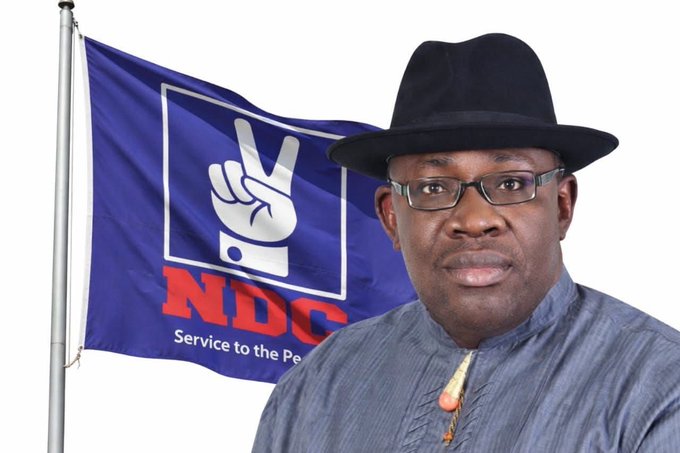
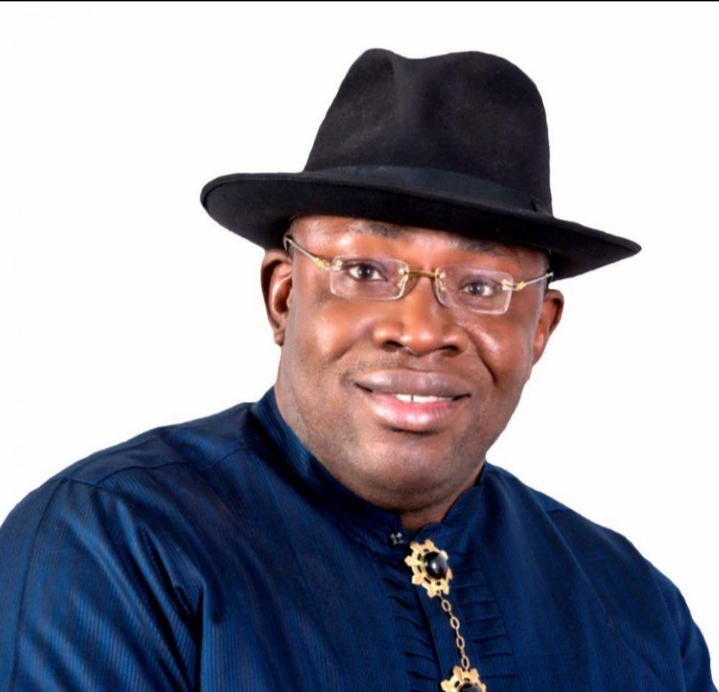
What happens when you combine the ancient bloodline of an Ijaw King with the gritty, unyielding discipline of a Nigerian Police Officer? You get a man built for the trenches of Nigerian politics. You get the founder and National Leader of the Nigeria Democratic Congress (NDC), Senator Henry Seriake Dickson.
In a political landscape dominated by career politicians and overnight billionaires, Dickson’s origin story stands out as a fascinating study in character, discipline, and deliberate choices. Long before the historic two-term governorship in Bayelsa, and long before the creation of the NDC, there was simply a young man from Toru-Orua figuring out how to build a legacy from the ground up.
The Royal Bloodline: The King Kapadia Heritage
Born on January 28, 1966, in Toru-Orua Town, Sagbama Local Government Area of Bayelsa State, Seriake Dickson was not born into obscurity. He is a direct descendant of the King Kapadia Royal House of the revered Tarakiri Kingdom.
In Nigeria, royal lineage often translates to early comfort, unearned privilege, and a fast track into the elite corridors of power. It is easy for descendants of royalty to lean entirely on their heritage, waiting for traditional titles or political patronage to fall into their laps. But the boy from Toru-Orua took an entirely different—and far more difficult—path.
He understood early on that true leadership is not handed down through a bloodline; it must be forged in the fire of discipline.
The Uncommon Path: Choosing the Badge
In 1986, rather than relying on his royal pedigree, a young Seriake Dickson made a decision that would permanently define his approach to leadership: he joined the Nigeria Police Force.
For nearly a decade, he walked the beat, experiencing the raw, unfiltered reality of the Nigerian streets. This was not a glamorous job. Serving in the police force during the late 1980s and early 1990s required immense grit, survival instincts, and a firsthand understanding of the nation’s deepest systemic flaws.
It was within the ranks of the police force that Dickson learned the fundamental mechanics of law, order, and grassroots reality—a foundation that clearly influences his current legislative focus on police reform and state security.
Balancing the Badge and the Books
Dickson was not content with just wearing the uniform; he possessed an intense intellectual drive. He managed to do what very few can: balance the grueling demands of active police duty with rigorous academic pursuit.
In 1988, while still serving in the force, he gained admission into the Rivers State University of Science and Technology in Port Harcourt to study law. He earned his LL.B in 1992 and proceeded to the Nigerian Law School. By 1993, the police officer was officially called to the Nigerian Bar.
His dedication did not go unnoticed by the police hierarchy. Shortly after his graduation from law school, he was appointed a Cadet Assistant Superintendent of Police and deployed to the elite Nigeria Police Academy in Kano for advanced Officers’ Training.
The Hard Pivot to the Courtroom
By 1994, Dickson stood at a massive crossroads. He had spent close to a decade building a highly promising career in law enforcement, culminating in an officer’s rank. He could have comfortably stayed in the force, rising through the ranks to become a Commissioner or even Inspector General.
Instead, he made a hard pivot.
Dickson voluntarily resigned from the Nigeria Police Force to enter the highly competitive world of private legal practice. He traded his police badge for the courtroom gavel, joining the prominent law firm of Serena David Dokubo & Co., and later the prestigious Aluko & Oyebode in Lagos, before betting on himself and founding his own firm.
That single decision set him on the path to becoming an Attorney-General, a two-term Governor, a serving Senator, and now, the chief architect of Nigeria’s fastest-growing political opposition movement.
The Making of a Reformer
When you look at Senator Seriake Dickson’s trajectory today—his absolute insistence on structural discipline within the NDC, his relentless push for constitutional restructuring, and his deep understanding of state security—it all traces back to those formative years.
He understands the law because he has practiced it at the highest levels. More importantly, he understands how to enforce it because he once wore the uniform.
What do you think? Is Seriake Dickson’s unique background in the police force the exact reason he is so intensely focused on constitutional and structural reform today? Drop your thoughts in the comments below!