





Why Nigeria Keeps Training Doctors for the World
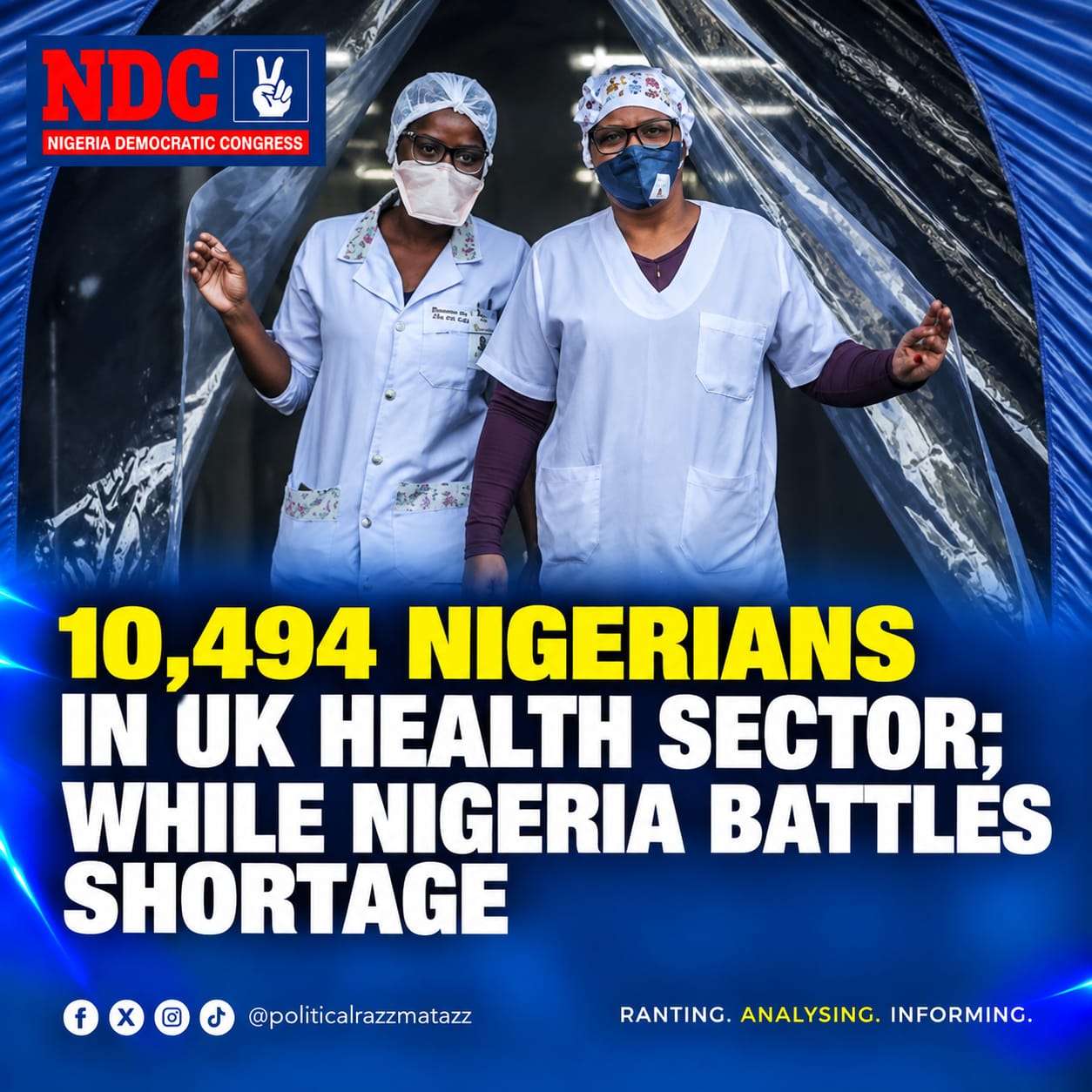
A striking new milestone in global health migration has brought Nigeria’s medical realities back into sharp focus: 10,494 Nigerian healthcare professionals are officially employed within the United Kingdom’s National Health Service (NHS).
According to workforce data published by the advocacy group NHS Million and detailed in a Premium Times report on NHS staffing, Nigeria now ranks sixth globally and first in Africa among foreign nationalities supporting the British healthcare apparatus.
On paper, it sounds like an applaudable achievement—Nigerian brilliance saving lives on the global stage. But back home, body dey pepper us. While wards in London, Manchester, and Birmingham gain experienced hands, primary health centers and tertiary teaching hospitals across Lagos, Kano, Enugu, and Yenagoa are gasping for personnel.
Nigeria is not simply witnessing regular migration; the country is caught in an escalating health workforce crisis that leaves vulnerable citizens without timely clinical care.
The Reality Behind the Numbers
The contrast between supply and domestic retention is staggering:
- Over 20,000 health workers exited in one year: The 2025 State of Health of the Nation Report from the Federal Ministry of Health and Social Welfare revealed that over 20,000 Nigerian healthcare personnel—including 3,919 doctors and nearly 7,500 nurses—relocated abroad within a 12-month period.
- Active licensing deficits: Although more than 95,000 doctors are registered nationwide, only about 60,551 maintain active practising licences.
- Surging UK registrations: Data from the UK General Medical Council indicates that nearly 16,000 Nigerian-trained physicians are currently licensed to practice in Britain.
As our elders say, na condition make crayfish bend. Nigerian medical workers are not fleeing because they dislike their homeland. They are leaving because of crumbling clinical infrastructure, uncompetitive remuneration, constant burnout, and a lack of protective workplace safety nets.
To stem this health workforce crisis, we have to look past cosmetic fixes and look straight into institutional reform.
Leadership That Built Solutions: Lessons from Sen. Seriake Henry Dickson
Halting medical brain drain requires genuine political will, transparency, and a demonstrated commitment to healthcare dignity. That is where the upright track record of leaders like Senator Seriake Henry Dickson and the governance principles championed by the NDC provide a practical blueprint.
During his tenure as Governor of Bayelsa State, Senator Dickson did not treat healthcare as an afterthought. Recognizing that medical talent leaves when the environment is unworkable, he took decisive, structural action:
- Founding the Bayelsa Medical University (BMU): Instead of merely mourning brain drain, he institutionalized medical education to expand local capacity, research, and clinical training.
- The Bayelsa State Health Services Scheme (BHSS): He pioneered one of Nigeria’s first robust sub-national health insurance frameworks, expanding access for civil servants and citizens while ensuring guaranteed revenue flow for state hospitals.
- Modern Diagnostics and Referral Infrastructure: He built and equipped the world-class Bayelsa Diagnostic Centre and established referral health centers across local government areas, ensuring doctors had functional diagnostic tools to save lives.
In the Senate, Senator Dickson has continued to exemplify upright character, legislative integrity, and deep advocacy for social justice, institutional autonomy, and health sector revitalization. His approach proves that when leaders govern with transparency and prioritize human capital, professionals have a reason to stay and serve. Resolving this health workforce crisis starts with building institutions that medical practitioners can trust and be proud of.
Until Nigeria addresses welfare, modern equipment, and institutional accountability, the health workforce crisis will continue to export top-tier talent funded by domestic public resources to richer nations.
What are your thoughts on this unfolding reality? Share your perspective in the comments: